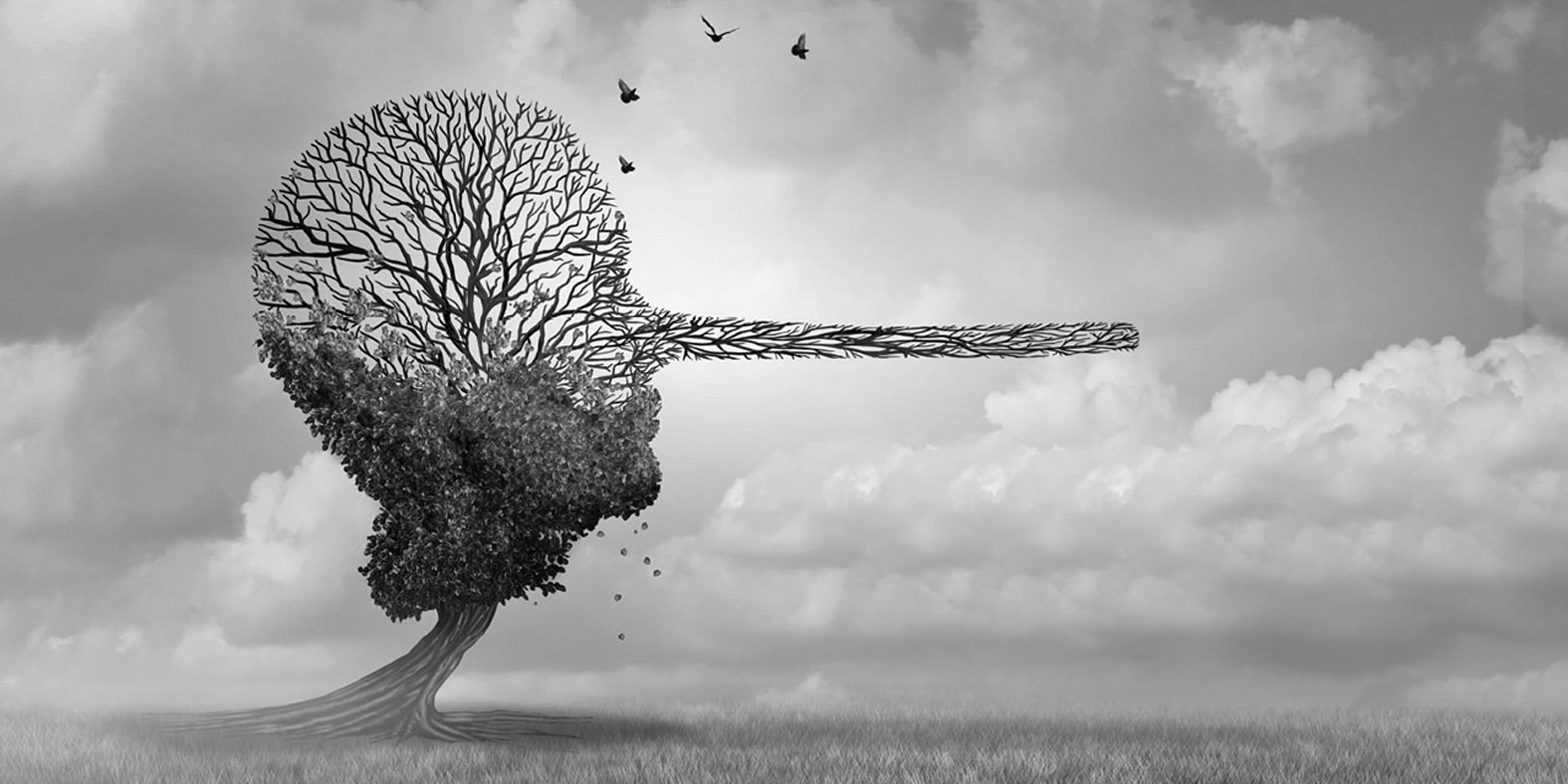
It is past time to legalize drugs. All of them.

Laws against drug use do not stop drug use or abuse. Instead, such laws and their enforcement exacerbate conditions in individuals which have led to their substance abuse. Current drug policy feeds a system of violence by funneling drug traffic to underground markets which in turn finance gangs and cartels. This violence escalates as community law enforcement shifts toward militarized weaponry and strategies, which leads to violations of individual, constitutionally-guaranteed rights. Meanwhile, taxpayers fund ever increasing costs for failed policies.

The Money $$

Incarcerating drug offenders costs U.S. taxpayers over $10 billion annually for over 485,000 prisoners. The federal government spends approximately one million dollars per day just on drug-related incarcerations, with state governments spending billions more. The average annual cost to incarcerate a single person is roughly $40,000 to over $65,000, far exceeding the cost of treatment.[1]

  • Imprisonment: $10 billion

Beyond incarceration, the total cost for police, prosecution, and adjudication of drug law violations are estimated at over $47 billion per year. Drug Enforcement Agency (DEA) budget for 2021 (last available year) was $3.28 billion.

  • Enforcement: $47 billion.

When including the societal costs of substance abuse (health care, criminal justice, lost productivity), the total impact is estimated at over $500 billion annually for substance abusers. Then there’s the cost of social services for families of persons convicted for drug crimes. An average of nearly $4,200 annually is paid by families to support their incarcerated loved ones, with a cumulative financial burden on families estimated at approximately $350 billion per year nationwide. Federal prison populations average 42.9% drug prisoners, costing tax payers $150 billion in social services for their dependents, while state prisons contain an average of 20% for drug crimes adding another $70 billion for social services, a total of $220 billion.[2][3]

  • Society: $720 billion.

The total societal cost for individuals with substance abuse problems, including lost productivity and health consequences, is much higher, with estimates exceeding $820 billion annually. For illegal drugs, the cost is estimated at $193 billion.

  • Personal: $193 billion[4]

The United States military spends roughly $1 billion annually directly on drug interdiction and counter-drug activities, with over $8 billion in surplus equipment transferred to law enforcement agencies since 1990. This spending involves the Department of Defense (DoD) supporting federal, state, and local agencies through intelligence, surveillance, and equipment transfers, particularly through the 1033 program.[5]

  • Military: $9 billion

Total estimated dollar cost of the U.S. drug war: $979 billion ANNUALLY.

The Human Cost

Roughly 75% of illegal drug users are self-medicating.[6] Research has shown that people with conditions like depression, anxiety disorders, bipolar disorder, PTSD, and ADHD may use illegal drugs to temporarily alleviate symptoms. For example, a person struggling with alcoholism through most of the fifty years of his life seeks therapy and discovers that he was bi-polar. Once appropriately medicated for bi-polar disorder, he no longer cared to drink. Many patients misusing drugs and alcohol have chronic pain and use these substances (such as marijuana and heroin, which have pain-relieving properties) to cope. Finally, in the absence of emotional support, individuals may use drugs to deal with increased stress, trauma, or a recent loss.

In a nation eager to spend billions of dollars to punish intoxication, far less energy and money is expended to provide physical and mental health care for persons in need. Illegal street drugs are less expensive than medical care. Even subsidized medical care often fails to fully address mental health or nutritional needs. For a chronically depressed person, for example, methamphetamine can elevate that person’s mood. Opiates can also seem the perfect answer, i.e. escape from reality.

Enforcement of prohibition laws further harms a person using illegal drugs. Humiliation, disenfranchisement, and poverty are collateral damage intentionally inflicted by arrest and prosecution. An arrest or conviction record can lead to eviction or denial of housing, particularly in public housing, with formerly incarcerated people being ten times more likely to experience homelessness. Interactions with the legal system can trigger child welfare investigations, potentially leading to family separation and foster care placement, adding to generational damage. Consequences can include the loss of voting rights, firearm privileges, and driver’s license suspension. Individuals may lose access to student loans, public benefits (like TANF or SNAP), and face significant financial burdens. These deleterious effects of prohibition laws only exacerbate an individual’s underlying problems.

There were approximately 105,000 to 108,000 annual drug overdose deaths reported in 2022 and 2023, with provisional data for 2024 indicating a significant decrease to around 80,000–81,700 deaths. The vast majority of these deaths involve illicit drugs, specifically synthetic opioids like illegally-made fentanyl, the primary driver of the overdose crisis in the United States, responsible for approximately 72,000 to 73,000 deaths annually as of 2023. These synthetic opioids account for nearly 70% of all illegal drug-related deaths.

Between 2001 and 2018, deaths from drug and alcohol intoxications in prisons and jails rose 600% and 400%, respectively. Factors in these surprising numbers include limited access to evidence-based treatment, such as Medication-Assisted Treatment (MAT) (e.g., methadone, buprenorphine), and high-turnover, high-stress environments. Additionally, researchers suggest that the true number of intoxication-related deaths is likely higher, as many are often miscoded on death certificates as “illness” or “unknown” causes, particularly when they occur shortly after booking. Treatment or medications for substance use disorder are rarely available behind bars.[7]

What makes the news are deaths from fentanyl, over 80,000 annually as noted above. But compared to drug deaths, deaths from legal alcohol use are estimated at 178,000 annually. Additionally, another 13,000 deaths (average) per year result from drunk driving. Excessive alcohol use remains a leading preventable cause of death, with estimates frequently exceeding 100,000 annual deaths attributable to chronic health conditions and acute events like accidents.[8]

Death from illegal drugs:

  • 2024 (Provisional): Approximately 79,384 drug overdose deaths were reported, representing a substantial, nearly 24% decrease from 2023.
  • 2023: Approximately 105,007 people died from drug overdoses, which was a slight decrease (about 3%) from the 107,941 deaths reported in 2022.
  • 2022: A total of 107,941 drug overdose deaths occurred.
  • 2021: A total of 106,699 drug overdose deaths

In comparison, deaths due to excessive alcohol use increased from 30,722 in 2014 to 54,258 in 2020-21 to 46,796 in 2024. These are direct results while alcohol-related causes totaled 178,000 deaths “in an average year.”[9] Polling shows that 54% of adults say that someone in their household has struggled with an alcohol use disorder.[10]

As we should have learned from efforts to eliminate alcohol use/abuse with the 1920 passage of the Volstead Act (repealed in 1933), prohibition laws open a vast underground market where criminals earn huge profits by supplying prohibited substances to the public. While there is no single definitive figure for the total size of the underground alcohol market between 1920 and 1933, the federal government lost an estimated $11 billion in tax revenue during Prohibition and spent another estimated $300 million in enforcement. Meanwhile, organized crime syndicates flourished, with major figures like Al Capone generating up to $100 million annually. Deaths attributed to alcohol poisoning during the thirteen years of prohibition are estimated at 50,000, i.e. slightly less than 4,000 per year.[11] This total is separate from other alcohol-related deaths including drunk driving and alcohol-related diseases such as cirrhosis of the liver.

Worse than the dollar cost for the current prohibition laws on certain drugs, however, is the human cost and the cost to our democracy.

Prohibition was—and is—a powerful political tool heralded by countless public office hopefuls who don’t hesitate to proclaim their support for prohibition laws. Notably, President Donald Trump has used drug trafficking to justify the outright murder of (so far) over 130 individuals by claiming they were carrying drugs in their boats—no judge, no jury.[12] Keep in mind that over 100,000 people die each year from prescribed drugs. Legal drugs. These include psychostimulants, cocaine, prescription opioids, benzodiazepines, heroin, antidepressants.

Data shows us that 27.9 million people, 9.7% of the population, will suffer an alcohol use disorder, while 28.2 million (9.8%) will suffer a drug use disorder. Equally noteworthy is that 21.2 million people had both a mental health disorder and a substance use disorder.[13] Other evidence is found to support the idea that at least half of persons with a substance abuse problem are self-medicating an underlying problem. Contributing factors include early use (before age 15 compared to those who wait until age 21 or later) and/or a family history of problem drinking. Altogether, nearly 20%–one in five people—face substance abuse problems.

The cost to our democracy is not just the extra-judicial murder of people in boats. It is the ridiculous idea that the government has the right and capability to monitor individual lives. To this end, government has armed community police departments with military-grade weapons and the development of SWAT teams in order to carry out the ‘war’ on our citizens. Yes, this is a response to wealthy street gangs protecting their turf against competing gangs as well as against law enforcement, but prohibition policies created this war that can never be won. People will continue to recreate and self-medicate. Police will continue to try to enforce the laws, failed as they are. Such laws open the way to selective enforcement, wherein persons of color or low income become easy targets. Black people are significantly more likely to be arrested for drug violations, with studies showing they are 3.6 times more likely than white people to be arrested for marijuana possession. Black and Latino people make up the majority of those in state and federal prisons for drug offenses. The imprisonment rate for Black adults for drug charges is nearly six times that of white adults. Almost never does law enforcement act against the wealthy or other ‘elites’ who most certainly can access effective legal advice before ever entering a jail cell.

These shameful outcomes in a so-called free society are due to the fact that drug laws are fundamentally unenforceable. Government cannot surveil private activity in the homes of American citizens, so traffic stops for spurious reasons lead to police sniffing the air rolling out of the car window to justify acceleration of their ‘investigation.’

This ouroboros of ill-considered public policy not only destroys our communities, it infects the entire nation with violence and lost opportunities.

Cost of Appropriate Care for Persons with Substance Abuse Disorder

Experts emphasize that substance abuse is often both a cause and a consequence of homelessness. While addiction can contribute to housing loss, many individuals also experience substance use as a form of “self-medication” to cope with the trauma and physical pain of living without stable housing, as previously discussed.

Walk-in, free community health clinics that focus on addiction treatment should include excellent nutrition, mental health diagnosis and treatment, and healing exercise (T’ai chi, mindful meditation, low impact exercises, walking, swimming). Such clinics must be established in every community where homeless populations are found and, subsequently, in every community of 25,000 or fewer or equivalent parts of larger communities. Each person must be linked with a counselor who advises not only on treatment options, but also on what social services are available and recommended, to include physical (including dental) and mental health care, educational options, job training programs, counseling on matters of family, personal relationships, and living conditions. Referral to housing with follow-up oversight requires that housing be available.

Housing for unsheltered persons is an important element in addressing addiction and mental health issues. Permanent Supportive Housing (PSH) is the gold standard for individuals experiencing chronic homelessness who have diagnosed disabilities. It combines long-term, stable housing with intensive, voluntary supportive services (such as mental health care, addiction treatment, and case management) to ensure long-term success. Cost: $12,000–$20,000 range, with some specialized cases involving higher service needs costing more. Rapid Re-Housing (RRH), often in the form of tiny home villages, is best suited for those experiencing non-chronic homelessness. This model focuses on getting individuals into their own apartments as quickly as possible. It provides short-term financial assistance (rent/utilities) and time-limited support services to help people stabilize and gain independence. RRH is lower-cost, short-to-medium-term assistance, estimated at roughly $8,500 annually.

Many experts argue that the high cost of homelessness—driven by public spending on emergency rooms, jails, hospitals, and crisis services—often exceeds the cost of providing stable, permanent housing.

National Alliance to End Homelessness: 

We calculated the additional Housing First placements needed to provide assistance for every household who experienced sheltered homelessness in 2022. Table 2 applies financial cost estimates (in 2022 dollars) to this expansion in placements. At an annual cost of $8,486 and $20,115 per adult household for each placement in Rapid Re-Housing and supportive housing, respectively, it would cost an additional $8.2 billion to rehouse all adult households who stayed in shelter in 2022.

The comparatively smaller number of families experiencing homelessness, almost all of whom are temporarily homeless, would mean that all sheltered homeless families could be rehoused using Rapid Re-Housing at an additional annual cost of $1 billion. The highly successful veterans Housing First placements can be expanded to cover all sheltered homeless veterans at an additional annual cost of $442 million. At an estimated total additional cost of $9.6 billion, all households that used shelter in 2022 could have been provided with a Housing First program.

Between 2001 and 2018, deaths from drug and alcohol intoxications in prisons and jails rose 600% and 400%, respectively. Treatment or medications for substance use disorder are rarely available behind bars.[14]

Estimated number of homeless persons in the United States (2024) is 772,000. For this number, high end estimated cost for PSH would total $15.4 billion.

Subtracted from the savings found in ending the drug war, providing housing for the homeless would leave $963.6 billion for other uses.

Lost Potential Income

The global illegal drug industry is estimated to be worth between $426 billion and $652 billion per year. The United States illegal drug industry is estimated to be worth between $200 billion and $750 billion per year. If you believe the people profiting from this income flow will hesitate to spend some of their ill-gotten wealth to lobby legislators at any hint of drug policy reform, I have a bridge to sell you.

If currently illegal drugs were legalized in the United States, regulated like alcohol for purity and dosage strength, and taxed, the income from those taxes would range between $7.5 billion and $225 billion per year. This 3% approximation is based on the rate used on alcohol in Arkansas. Alcohol tax differs from state to state, in addition to federal tax per ounce of pure alcoholic content.  For spirits, wine, and beer, the federal rate is 21 cents, 6 cents, and 9 cents, respectively, leaving no easy method of comparing alcohol tax rates to potential tax on currently illegal drugs. No doubt a modest tax rate on what is currently sold on the black market would be substantial. Potential tax income from legalized drug tax: $7.5 to $225 billion.

Also profiting the nation would be new income for farmers, processors, and retailers providing drugs to the public. For comparison, consider the Arkansas medical marijuana market. Since its 2019 launch, the Arkansas medical marijuana industry has exceeded $1.1 billion in total sales. In February and March 2024 combined, the state’s 38 dispensaries sold nearly $45 million in products. As of March 2, 2026, the average annual pay for a Cannabis Grower in Arkansas is $51,905 ($24.95/hour), with most salaries ranging from $31,100 to $66,500. Top earners (90th percentile) in the Arkansas cannabis cultivation sector can make up to $81,841 annually. Broader roles within the Arkansas cannabis industry average around $118,867 a year ($57.15/hour). Of key note, Arkansas has collected over $127 million in state tax revenue from medical marijuana in the last five years.

Imagine these numbers amplified if production and sales weren’t limited to people certified as medical use! Instead, current policies are supporting various actors in this international underground drug trade, including:

  • Transnational Criminal Organizations (Cartels): These “international logistics companies” manage the large-scale trafficking and distribution. Leaders (“kingpins”) can accumulate immense personal fortunes, often running into billions of dollars, though the majority of revenue is distributed among lower-level participants in destination countries.
  • Wholesalers and Distributors: Individuals in destination countries like the US and the UK who break down large shipments and distribute them to local dealers capture an estimated 70% to 80% of the total revenue, primarily due to the high retail price and significant risks involved at this stage of the supply chain.
  • Street-level Dealers: While often making modest incomes (sometimes compared to minimum wage, though still a living wage for many), these individuals are numerous and collectively account for a large portion of the market’s revenue. Their earnings are often used for everyday living expenses.
  • Farmers and Producers: At the very beginning of the supply chain, farmers in producer countries (e.g., Afghanistan for poppy, Colombia for coca) earn very little compared to the final street value of the drugs.
  • Corrupt Officials: Bribes and payoffs supplement the incomes of government officials, police, and border control agents at various levels, enabling the flow of drugs and money.
  • Professionals involved in Money Laundering: Individuals such as lawyers and accountants are involved in creating shell companies, using offshore accounts, and running cash-intensive businesses (like bars, salons, or construction companies) to disguise illicit funds as legitimate income.
  • Legitimate Businesses: Drug money is often laundered by investing it in the legitimate economy, including the stock market, real estate, and various small businesses, which in turn profits from these cash infusions.
  • For example, a DEA memo, part of a recent (early 2026) release of Justice Department files, shows that the agency opened an investigation into Jeffrey Epstein and others in December 2010. The investigation was still pending as of 2015, the date of the memo. The document specifically noted that Epstein was suspected of transferring more than $5.6 million for the purpose of acquiring narcotics.

Ultimately, illegal profits sustain the operations of the entire criminal network and fund related illicit activities such as human trafficking and arms trafficking.

Farmers would be one of the primary beneficiaries of legalized drugs, capable of producing not only crops of marijuana, but also opium poppies and coca bush. The two latter agricultural products are well established outside the continental U.S., as are harvesting and processing methods. Populations which have traditionally produced opium are primarily Afghanistan and parts of the North-West Frontier Province (now Khyber Pakhtunkhwa, Pakistan). Coca production and processing are traditionally in Peru, Bolivia, Colombia, and Ecuador. These areas would greatly benefit from legalizing their farming of these substances.

Clearly, ending the U.S. drug war would create tremendous benefits around the world.

The Drug War’s Role in Illegal Immigration

In particular, legalized drugs would remove the U.S. boot from the necks of Central and South American nations whose drug cartels currently exercise a combination of extreme violence, territorial control, corruption, and diversification into other criminal and legitimate economic activities in their home nations. Drug cartels exert a profound, direct, and increasingly violent influence on immigration into the United States by controlling, taxing, and facilitating the movement of people across the U.S.-Mexico border. They have transformed migrant smuggling into a multi-billion dollar business that often works in tandem with drug trafficking, turning the border into a “pay-to-pass” system.

But that is only part of the drug war benefit to cartels in the immigration arena. Violence, including that stemming from drug trafficking, gang activity (maras), and extortion, is a primary driver of emigration from Central America, with studies suggesting it acts as a, or the, main catalyst for 39% to over 60% of migrants, particularly from the “Northern Triangle” (El Salvador, Honduras, and Guatemala). The violence associated with the drug trade damages local economies, reduces investment, and destroys jobs. Research indicates that this “economic channel” is the dominant force behind migration, as people flee not just the immediate threat of violence, but the loss of livelihood. Gangs frequently target youth for forced recruitment, leading many families to send their children to the U.S. for safety, resulting in surges of unaccompanied minors.

The immigration problem for the U.S. is not limited to Central America. Even further south from our borders are people desperate to leave South America. The majority of South American immigrants to the southern border of the United States are from Colombia, Venezuela, Brazil, Ecuador, and Peru.

As of early 2026, the political-economic situation regarding the drug war in Venezuela is defined by a deeply entrenched, state-involved narco-trafficking infrastructure that functions amid a severe economic, humanitarian crisis, and intense pressure from the United States. The government is largely seen as a “gangster state” where, under the Maduro regime, the military and security apparatus became reliant on illicit revenue streams to maintain power, particularly through the “Cartel of the Suns”. Roughly 49% to over 72% of Venezuelan migrants to the U.S. have cited insecurity and violence as a reason for leaving their country.

As of early 2025, over 400,000 Ecuadorians had left the country since 2021, with a significant and growing percentage driven by drug war violence and, in some cases, forced recruitment. The political and economic situation regarding the drug war in Ecuador is characterized by a “new phase” of intense, US-backed military operations against “narco-terrorist” gangs, which have largely taken over criminal control of the country’s Pacific ports. Despite President Daniel Noboa’s “iron fist” policies—declaring an internal armed conflict and deploying the military—homicides reached record-highs in 2025, with over 9,000 violent deaths, making it one of the most violent nations in the world.

The political and economic situation regarding the drug war in Colombia in early 2026 is characterized by heightened tensions with the United States, record-high cocaine production, and a contentious shift in strategy under President Gustavo Petro. Cocaine trafficking is a massive, parallel economy in Colombia, generating an estimated $15.3 billion annually, equivalent to roughly 4.2% of the country’s GDP. Petro has moved away from forced eradication toward voluntary substitution and “total peace” negotiations with armed groups, a policy that has struggled to show results and has antagonized the Trump administration.

In Brazil, the highest rates of homicide, often linked to drug trafficking disputes, are concentrated in the North and Northeast regions, prompting migration from these areas. Brazil struggles with high rates of homicide (roughly 23.8 per 100,000 residents), gang violence, and robbery, largely driven by the illegal drug trade.

In Peru’s rural, coca-growing regions like the VRAEM (Valley of the Apurímac, Ene, and Mantaro Rivers), violence, extortion, and illegal mining have forced many to leave. Drug traffickers have increased violence against indigenous communities, causing displacement. The reduction of USAID funding, particularly under the Trump administration, has created uncertainty regarding the continuation of alternative development programs that were designed to encourage farmers to switch from coca to legal crops.

Overall, immigration enforcement and border security costs have reached record highs in the U.S., with proposed and approved funding for FY2025–2026 exceeding $100 billion over four years, including a roughly $10 billion annual budget for U.S. Immigration and Customs Enforcement (ICE) and nearly $20 billion for U.S. Customs and Border Protection (CBP) in 2024. Recent legislation has significantly boosted these figures, allocating $45 billion for detention, $30 billion for removals, and $46 billion for border walls, creating a massive “deportation-industrial complex.”

Obviously, ending the drug war would destroy the cartels, thereby allowing for a return to normalcy in these Central and South American nations. Granted, this won’t occur overnight. The damage has occurred over decades. Still, if such an improvement came to pass, we could estimate at the very least a 50% reduction in this budget, from $100 billion to $50 billion, and probably significantly more.

Dispensing Drugs in a No-Prohibition Nation

Almost 300 million people are estimated to consume illicit drugs regularly, with the three most popular being cannabis (228 million users), opioids (60 million) and cocaine (23 million). But that is a drop in the bucket to the actual drug consumption. Nearly 260 million Americans use over-the-counter (OTC) medications, purchasing them an average of 26 times per year. In 2024, OTC medication sales in the U.S. were estimated at $44.3 billion. Studies show that 81% of U.S. adults used at least one OTC medication, prescription medication, or dietary supplement in the past week. Further, approximately 6.3 billion prescriptions were filled in the U.S. in 2020 alone. Nearly two-thirds of U.S. adults (about 64.8%) report taking at least one prescription medication annually, treating conditions such as Type 2 diabetes, high blood pressure, and high cholesterol.

The mean cost of developing a new drug from 2000 to 2018 was $172.7 million (2018 dollars) but increased to $515.8 million when cost of failures was included and to $879.3 million when both drug development failure and capital costs were included. Clearly pharmaceutical companies are betting on a return, with profits. According to the healthcare intelligence company IQVIA, the U.S. alone accounted for nearly half of all worldwide prescription drug sales in 2024, generating almost $800 billion in revenue, within a global pharma market estimated at $1.7 trillion. Pharmaceutical companies spend over $10 billion annually on direct-to-consumer (DTC) advertising in the U.S., with the top 10 drugs accounting for over one-third of that total. TV ads represent about half of this, totaling over $5 billion. Total marketing and sales spending for some major companies, such as AbbVie and Johnson & Johnson, frequently exceeds their research and development (R&D) budgets.[15]

Face it. Drugs are everywhere. Large signs declare “DRUGSTORE.” Television offers drug advertisements up to 16 hours of drug ads per year, with some studies suggesting even higher exposure of over 30 hours, exceeding the average time spent with a primary care physician. The pharmaceutical industry spends billions on direct-to-consumer (DTC) advertising, with $6.58 billion spent in 2020 alone. The U.S. is one of only two countries—along with New Zealand—that allows direct-to-consumer drug advertising on TV. As the population ages and chronic disease rates rise, pharmaceutical companies have responded by increasing their ad spend to promote new and patented drugs directly to consumers.

According to the FDA’s Office of Prescription Drug Promotion, these are the most common issues found in today’s drug commercials: Omitting or downplaying of risk; Overstating the drug’s benefits; Failing to present a “fair balance” of risk and benefit information; Omitting material facts about the drug; Making claims that are not appropriately supported; Misrepresenting data from studies; Making misleading drug comparisons; and Misbranding an investigational drug.[16] Not mentioned is the unstated theme that every human problem can be solved with medication. Ads show the medicated person suddenly surrounded by happy dancing people reveling in sunny vistas of idyllic surroundings.

Direct-to-consumer advertising has contributed to a rise in overall prescription drug use among Americans, from 39% (1988-1994) to nearly 50% (2017-2020), fostering a culture that seeks pharmaceutical solutions for various conditions. The most direct parallel occurred in the late 1990s, when pharmaceutical companies aggressively marketed opioids (like OxyContin). The deluge of marketing fueled over-prescription, leading to widespread addiction, and as legal restrictions increased, many users shifted to cheaper illegal alternatives like heroin and fentanyl, according to experts.[17]

Drugs, like alcohol, are also useful for recreation, a way to quickly switch one’s mood and energy from the caffeine-fueled drive to complete tasks to the relaxed kick-back mode when enjoying music, movies, alone time, or other people. While a beer or mixed drink serves that role for many, many others may prefer marijuana which doesn’t leave a hangover or, for alcoholics, trigger a lapse.

Marijuana

Names include ‘hemp’ (for industrial, low-THC types, use is primarily of plant stalks) and cannabis strains such as Cannabis sativa, indica, and ruderalis. Active ingredients area found primarily in flower buds, isolated from male plants by growers who force females to keep producing flowers instead of seeds.

There are no recorded, verifiable cases of a fatal human overdose from marijuana alone. Cannabis (marijuana) produces various physical and mental effects by acting on brain receptors, commonly causing euphoria, relaxation, and heightened sensory awareness. Short-term, it can impair memory, motor skills, and judgment, with risks including anxiety, panic, or psychotic symptoms. Long-term effects may include respiratory issues, cardiovascular strain, and dependence.

Despite fluctuations, marijuana use rose from 10.17% in the 1990s to 17.81% from 2010-2017. A 2021 study using U.S. data found that in some states (e.g., Colorado), legal recreational cannabis was associated with a 13% average monthly decrease in the purchase of all alcohol products, with wine sales showing a 6% decrease. A 2024 survey indicated that 36% of U.S. cannabis users reported drinking less alcohol. Legalization, particularly of medical marijuana, has been linked to a 15% decrease in monthly alcohol sales, specifically beer and wine, in legalizing counties compared to control counties. Some studies show that legal cannabis access is associated with a decrease in alcohol-related traffic fatalities. Recent 2025 research indicates that following the opening of retail cannabis stores, alcohol use declined among young adults (18–29), and binge drinking frequency decreased among adults aged 50–59. Some studies suggest that since alcohol is a common factor in violent crime, the substitution of cannabis for alcohol may contribute to a reduction in violent crime rates.

Cannabis cannabinoids (like THC and CBD) bind to the same natural, endogenous cannabinoid receptors CB1 and CB2 that exist naturally in the human body. There are natural cannabinoids our bodies naturally use to regulate functions like mood, memory, sleep, and pain. These receptors are part of the endocannabinoid system (ECS), which is widespread throughout the brain and body.

Coca

Erythroxylum coca var. coca

Coca leaves, traditionally used in the Andes to combat hunger, thirst, and fatigue, act as a mild stimulant similar to strong coffee. They are rich in nutrients, aid with altitude sickness, and are used for cultural/religious purposes. While generally safe in traditional, low-dose, unprocessed forms, they can still cause positive drug tests. There are no data on possible deaths due to coca leaf use. Although the leaves are used to treat common ailments and boost energy every single day, it has been found that regular use is nothing but a cultural habit, and is not addictive, harmful or mind-altering, unlike cocaine.

Indigenous peoples of South America have used coca leaves for at least 8,000 to 10,000 years. Archaeological evidence, including findings in Peru’s Nanchoc Valley, confirms that early Andean societies integrated coca into their cultures for medicinal, religious, nutritional, and social purposes long before the rise of the Inca Empire. Cocaine was first isolated from coca leaves in 1855 by German chemist Friedrich Gaedcke, who named it “erythroxyline.” It was later purified in 1859-1860 by Albert Niemann, who gave it the name “cocaine.”

Cocaine is a powerful, highly addictive stimulant drug that acts on the central nervous system to produce intense, short-lived feelings of euphoria, high energy, and mental alertness. It works by causing a massive buildup of dopamine in the brain’s reward circuits, while also constricting blood vessels and increasing heart rate. The effects are generally divided into immediate (short-term) and long-term consequences, both of which carry significant health risks. Before the widespread influx of illicitly manufactured fentanyl (roughly prior to 2013-2015), the cocaine-involved overdose death rate in the U.S. was significantly lower and relatively stable, often fluctuating between 1.3 and 2.5 deaths per 100,000 population.  As fentanyl entered the market, the rate began rising by about 27% annually starting in 2013, surpassing the 2006 peak by 2016 and reaching 7.3 per 100,000 by 2021. Approximately 79% of cocaine-involved overdose deaths also involve opioids, mainly synthetic opioids like fentanyl, which is the primary driver of the increased death rate. Legalizing cocaine with requirements for product purity, the cocaine death rate would once again drop to its low baseline of pre-2013.

At the extreme end of the stimulants, methamphetamine (meth, also called crystal, chalk or ice) is an addictive stimulant that can be administered orally, smoked, snorted or injected. Smoking or intravenous injection delivers meth to the brain rapidly, resulting in immediate and intense euphoria. Meth use is associated with severe neurological and physical consequences (e.g. paranoia, violent behavior, psychosis, anxiety and depression) and has become a serious public health problem worldwide. The age-adjusted rate was 8.5 deaths per 100,000 population.[18]

In the family of synthetic stimulants:

Methamphetamine (Crystal Meth): Often considered more powerful and addictive than cocaine, methamphetamine releases significantly more dopamine in the brain and has a much longer-lasting high (12–14 hours compared to 1 hour for cocaine). It is generally considered the strongest stimulant available, providing a longer, more intense, and faster-acting addictive effect.

Desoxypipradrol: Research indicates this compound, found in some “legal highs” is more potent than cocaine in causing dopamine release and slowing dopamine re-uptake, with studies suggesting a sevenfold increase in dopamine levels compared to three times for cocaine.

MDPV (“Bath Salts”): MDPV acts similarly to cocaine by inhibiting dopamine re-uptake but is reported to be nearly 10 times more potent, providing a much stronger, uncontrollable high. “Bath salts” is a slang term for this dangerous, lab-made synthetic cathinone (a naturally-occurring stimulant monoamine alkaloid found in the khat shrub (Catha edulis), chemically similar to amphetamines and ephedrine) and are central nervous system stimulants designed to mimic the effects of illegal drugs like cocaine and methamphetamine.

Opiates

Opium poppy Papaver somniferum

The poppy’s offering for human use began as early as 5000 BCE in the Neolithic age, with the oldest archaeological evidence found in the Mediterranean region. Seeds from this era suggest it was used for food, rituals, and early medicinal purposes. It was later documented in ancient Egyptian, Greek, and Roman medical texts. The plant’s chemistry has moved from the most basic form of flower pod gum named opium (dried latex obtained from the seed pods of the opium poppy) to morphine, developed in 1804 through a process involving harvesting raw opium, followed by chemical extraction and purification to isolate morphine from other alkaloids like codeine, which was developed in 1832 and touted as a ‘cure’ for morphine addiction.

Heroin was first synthesized in 1874 by C. R. Alder Wright from morphine. It was later commercialized by the Bayer pharmaceutical company in 1898 as a cough suppressant and pain reliever, widely marketed as a non-addictive alternative to morphine before its addictive nature was fully understood, leading to its eventual strict regulation. Thereafter, numerous semi-synthetic and synthetic opioids were developed, largely in the 20th century, to provide pain relief with the hope of reducing addiction potential. Key opioids developed after heroin include:

Methadone (1930s-1940s): Developed in Germany, this synthetic opioid is used for pain management and to treat opioid use disorder.

Meperidine (Demerol) (1930s): The first synthetic opioid, designed to be a safer alternative to morphine.

Oxycodone (OxyContin/Percocet) (1916): While synthesized shortly after heroin, it gained widespread prominence in the late 20th century, particularly with the 1996 release of OxyContin.

Hydrocodone (Vicodin) (1920s): A semi-synthetic opioid created from codeine.

Buprenorphine (1960s): Developed as a partial agonist for pain and later approved in 2002 for the treatment of opioid addiction.

Fentanyl (1960): A highly potent synthetic opioid, roughly 50 to 100 times more potent than morphine, developed for surgical anesthesia and pain management. Its extreme potency makes the risk of fatal overdose significantly higher than that of cocaine, especially since it is often found as a contaminant in other illicit substances. It is less expensive than natural opioids because it is made from synthetic substances whereas natural opioids depend on poppy production.

Opiates exert their main effects on the brain and spinal cord. Their principal action is to relieve or suppress pain. Like all opiates, opium causes a pleasant, drowsy state, in which all cares are forgotten and there is a decreased sense of pain (analgesia). Immediately after injection, the feelings are most intense. This feeling is described as similar to a sexual orgasm. The drugs also alleviate anxiety; induce relaxation, drowsiness, and sedation; and may impart a state of euphoria or other enhanced mood. In the body, opiates also have important physiological effects; they slow respiration and heartbeat, suppress the cough reflex, and relax the smooth muscles of the gastrointestinal tract. Opiates are addictive drugs–i.e., they produce a physical dependence (and withdrawal symptoms) that can only be assuaged by continued use of the drug.

Long-term opium use is associated with a significantly increased risk of death from nonmalignant respiratory diseases (such as COPD, asthma, and pneumonia) and cardiovascular disease. In one study, opium consumption was significantly associated with increased risks of deaths from several causes including circulatory diseases (hazard ratio 1.81) and cancer (1.61). The strongest associations were seen with deaths from asthma, tuberculosis, and chronic obstructive pulmonary disease (11.0, 6.22, and 5.44, respectively).[19]

The most powerful synthetic opiate invented so far is fentanyl. Similar to other opioid analgesics, fentanyl produces effects such as: relaxation, euphoria, pain relief, sedation, confusion, drowsiness, dizziness, nausea and vomiting, urinary retention, pupillary constriction, and respiratory depression. Death rates for fentanyl are 14.3 deaths per 100,000 standard population in 2024, marking a significant 35.6% decrease from the 2023 rate of 22.2. Despite this recent decline, fentanyl remains the dominant driver of fatal overdoses in the U.S., involved in roughly 60% to 70% of all drug overdose deaths.

Hallucinogens

The most potent species of Psilocybe are members of genus Psilocybe, such as P. azurescensP. semilanceata, and P. cyanescens. Above, Psilocybe semilanceata

Not mentioned so far are the hallucinogens, primarily LSD, peyote/mescaline, psilocybin, salvia, and DMT/Ayahuasca. Considered sacramental to many, use of these drugs can lead to spiritual insights, so-called “mystical” experiences such as the sense of “pure” being, the sense of unity with one’s surroundings, the sense that what one experienced was real, and the sense of sacredness. There are similarities between psychedelic experiences and non-ordinary forms of consciousness experienced in meditation and near-death experiences. The phenomenon of ego dissolution is often described as a key feature of the psychedelic experience.

Peyote cactus Lophophora williamsii

Ancient religions used various plant-based hallucinogens (entheogens) for rituals, including Soma in Vedic Hinduism circa 1500 BCE, psilocybin mushrooms and morning glory among the Maya/Aztecs circa 3000 BCE, Tabernanthe iboga in African Bwiti, and Datura by Mississippian cultures. These substances were used to achieve ecstatic states, connect with deities, and induce prophetic visions. Some scholars argue that early Christian, Roman-Egyptian, and Greek rites used psychoactive substances in their sacraments.[20]

Users typically report seeing colors, patterns, and shapes that are not real, such as complex, moving geometric patterns (fractals), or trails/tracers behind moving objects. Other effects range from Sensory Confusion (Synesthesia),acommon experience where senses blend, such as “hearing colors” or “seeing sounds”; Time and Space Distortion: Perception of time can slow down significantly, speed up, or seem to stop; and Self-Identity Alteration: Users may experience “ego dissolution,” where the boundary between self and the external environment becomes blurred, sometimes leading to a feeling of becoming one with their surroundings.

Multiple studies suggest psilocybin can produce rapid, substantial, and long-lasting antidepressant effects, sometimes for as long as six months to a year after just one or two doses. The FDA has granted “breakthrough therapy” designation to psilocybin for both conditions to expedite research and development. Psilocybin has shown efficacy in reducing anxiety and distress in patients with life-threatening conditions, such as cancer, promoting improved quality of life and well-being. Pilot studies for alcohol use disorder and tobacco addiction have demonstrated promising success rates, with some participants achieving long-term abstinence. The National Institute on Drug Abuse (NIDA) is funding a multi-site study on its effectiveness for tobacco addiction. Research is also exploring its potential for post-traumatic stress disorder (PTSD), obsessive-compulsive disorder (OCD), and cluster headaches, with encouraging initial results in small studies.

LSD molecule

First time users of hallucinogens are best served by exploring the experience in the company of an experienced user. Best results with hallucinogens would occur when the user is not under the influence of alcohol or any other drug. He/she should remain for the duration in a safe, comfortable space with no unexpected interruptions. Since the effects of LSD, for example, take at least 1-2 hours to gradually come into force, then continue to rise for 3-4 hours, then linger for up to another six hours, the user should pay attention to periodic refreshment with water. Generally the user will experience no appetite for food. The experience can be unsettling if the subject is trying to interact with the public or large crowds, or if the experience is initiated when the subject is already tired or not feeling well. These nuances of the psychedelic experience with any particular drug are why first time users benefit from being accompanied by a trusted, experienced user.

Tobacco and Alcohol

Tobacco is the common name of several plants in the genus Nicotiana of the family Solanaceae, and the general term for any product prepared from the cured leaves of these plants. Seventy-nine species of tobacco are known, but the chief commercial crop is N. tabacum. The more potent variant N. rustica is also used in some countries

Not mentioned in the discussion so far are tobacco products. Known to be carcinogenic, tobacco is credited with 490,000 deaths per year in the United States. This is more than all illegal drugs and alcohol combined at total of 278,000—80,000 to 100,000 per year from currently illegal drugs and 178,000 from legal alcohol use. However, there is evidence that pesticides and other chemicals contribute to tobacco-related deaths, both for smokers and for agricultural workers who are directly exposed during farming.[22] However, no research to date is found showing less harm from organic tobacco.

Different policy approaches to these various substances is a combination of tradition and risk of collateral damage in those who abuse the substance. For example, tobacco has been popular in its various forms of usage for over 600 years in Western cultures, although indigenous peoples have used it over 10,000 years. Aside from the real damage caused by second-hand smoke, there is no perceived risk to others from its use.

Nicotiana tabacum was used traditionally for wide range of disorders, it administered externally for bites of poisonous reptiles and insects, pain, neuralgia, gout, to enhance hair growth, in the treatment of ringworm, ulcers, wounds, and as respiratory stimulant. It is the nicotine that causes smokers to become addicted to tobacco, and the chemical itself is lethal in small doses. When tobacco smoke is inhaled, the nicotine passes quickly to every organ of the body. The brain and nervous system are stimulated by small doses and depressed by larger ones.

Alcohol use, on the other hand, with the earliest chemically confirmed, recorded use dating to approximately 7,000–6,600 BCE in Jiahu, a Neolithic village in China’s Yellow River Valley, has several legitimate, modern medical uses, primarily as a topical antiseptic-disinfectant (hand sanitizer, skin prep), an ingredient in pharmaceuticals, and an agent in specialized procedures like nerve ablation or cyst sclerotherapy. Historically used for pain and sedation, it is not recommended for systemic consumption and been linked to liver disease, heart problems, and certain cancers. Alcohol can cause brain damage, especially with chronic use.

Alcohol adversely affects behavior in some users, leading to problems like drunk driving and negative behavior including:

  • Intimate Partner and Family Violence: Alcohol is present in a significant percentage of domestic violence incidents, often increasing the severity of the abuse.
  • Assault and Battery: Impaired judgment and increased aggression frequently lead to physical altercations, including aggravated assault.
  • Sexual Assault: Alcohol use by both perpetrators and victims is frequently observed in sexual assault cases, where it can suppress inhibitions or affect risk perception.
  • Homicide: Alcohol is highly correlated with violent crimes, including homicides.
  • Property Crimes: Impulsive decision-making and reduced consequences-awareness can lead to crimes such as robbery, theft, and vandalism.

Alcohol is highly addictive because it acts on multiple neurotransmitters, slowing down the nervous system while releasing a surge of dopamine. Alcohol addiction withdrawal can be fatal, requiring professional, medical supervision. But modern medications like Xanax and Valium, designed to treat anxiety, also are highly addictive, causing severe physical dependence and dangerous withdrawal symptoms. Considered a behavioral “addiction,” gambling stimulates the same reward circuits in the brain as drugs, driven by the anticipation of reward and risk. Addictions to high-sugar or high-fat foods can trigger intense cravings similar to drug addictions. Most recently, technology (Internet/Social Media) has been determined to be addictive, characterized by compulsive use driven by dopamine hits from social interaction and instant gratification.

But What About the People?

In order to fulfill the promise offered by the end of prohibition, we as a society must accept that each individual is responsible for his/her own well-being. The state is not a parent who must watch over and discipline its children. By declaring drugs, drug dealers, or Satan, or any other phantom as the ‘reason’ someone uses drugs, we take away that individual’s agency as a human being while assigning responsibility to an invisible non-entity that no one controls. By taking away a person’s direct responsibility for his or her problems, we render them helpless. This is, sadly, a mantra for Alcoholics Anonymous, which states “We admitted we were powerless over alcohol — that our lives had become unmanageable.”

This mindset is criticized by many for the following reasons:

  • Undermining Self-Efficacy and Agency: Critics argue that constantly reminding individuals that they are fundamentally powerless can damage their belief in their own ability to change. This loss of self-efficacy—the belief in one’s capacity to succeed—can lead to a fear of attempting to change behaviors independently.
  • Encouraging a “Victim” Mindset: By emphasizing that the individual is powerless against a disease, it may become easier for them to deflect blame for their actions, leading to a mindset of helplessness.
  • Self-Fulfilling Prophecy of Failure: The belief that “I am powerless” can become a self-fulfilling prophecy. Critics contend that this mindset, combined with an “all-or-nothing” approach to sobriety, can cause individuals to abandon recovery entirely after a single relapse or slip-up.
  • Disempowerment vs. Empowerment: Instead of promoting empowerment, some argue that the focus on powerlessness can be psychologically damaging, negatively impacting self-esteem by forcing individuals to define themselves as broken or lacking control.
  • Discounting Personal Responsibility: A major criticism is that the focus on powerlessness can lessen the urgency to take personal responsibility for one’s actions, which many believe is a cornerstone of behavioral change.
  • Potential for Shame and Despair: The requirement to admit total defeat, or “hit rock bottom,” can plunge individuals into intense shame, guilt, and despair rather than providing an immediate sense of hope.

Other programs that adhere to this 12-step concept are Narcotics Anonymous (NA), Cocaine Anonymous (CA), Crystal Meth Anonymous (CMA), Marijuana Anonymous (MA), Gamblers Anonymous (GA), Overeaters Anonymous (OA), Sexaholics Anonymous (SA), plus Al-Anon and Nar-Anon, programs for families and friends. (Clearly addictive behavior is not limited to illegal drugs) Success data for these programs is not encouraging: Long-Term Abstinence: 5% to 10% of participants achieve long-term, sustained sobriety. Some studies have shown that 50% to 70% of those who attend weekly or near-weekly meetings maintain abstinence. AA’s own surveys have indicated that approximately 35% of members have been sober for more than five years. Evidence-based treatments like Cognitive Behavioral Therapy (CBT) and medication-assisted treatment (MAT) often yield higher success rates, with some studies showing 60% abstinence after one year of therapy.

In a 2011 study, the cumulative probability estimate of transition to dependence was 67.5% for nicotine users, 22.7% for alcohol users, 20.9% for cocaine users, and 8.9% for cannabis users. Half of the cases of dependence on nicotine, alcohol, cannabis and cocaine were observed approximately 27, 13, 5 and 4 years after use onset, respectively.[23] In comparison, approximately 14% to 20% of U.S. adults are estimated to have an addiction to highly processed foods. This condition, which involves compulsive eating behaviors similar to substance abuse, is higher in specific groups, including up to 28% of adults with obesity and roughly 13% of adults aged 50–80. Roughly 3% to 11% of the U.S. population may experience issues related to pornography addiction, with studies indicating a higher prevalence among men. Approximately 3% to 5% of Americans experience some form of gambling-related harm. Estimates suggest that approximately 3% to 6% of the U.S. population may suffer from sex addiction or compulsive sexual behavior, affecting roughly 10-20 million people. Some research indicates this figure may be as high as 8.6% to 10%, with men being more frequently affected than women.

Pricing Legalized Drugs

Upon purging U.S. policies of the drug war, prices for legalized natural intoxicants (marijuana, coca leaf, opium gum) should be substantially lower than for legalized refined products like cocaine or opium derivatives such as morphine and codeine. This type of pricing reflects the relatively less harmful effects of the naturally-occurring material. Currently, forty states (80%) have legalized marijuana for medical use and twenty four states (48%) have legalized for recreational use. As of early 2026, the price range for a gram of recreational marijuana typically falls between $3 and $20, with the national average often hovering around $10–$15. The price varies significantly based on state, quality (budget vs. premium), and market maturity. In states where marijuana remains illegal, the price per gram in early 2026 typically ranges from $10 to $20, with some premium or highly restricted areas seeing prices reach up to $50 per gram. In current commercial grades of marijuana, THC (tetrahydrocannabinol) can range from less than 10% up to 30%. One time dose for 20% THC content, with one puff delivered either from a “joint” or in a pipe and containing .32 gram, will be felt almost immediately and last 1-3 hours.[24]

Oregon (2020) and Colorado (2022) have legalized or decriminalized the supervised use of psilocybin. In those states, a 1-2 hour micro-dosing session may cost around $500. A complete psilocybin-assisted therapy session, which can last up to six hours and includes pre- and post-session consultations, typically costs between $1,000 and $3,000, and sometimes more. Multi-day, immersive experiences offered by some companies can cost between $4,000 and over $7,700. Street prices for psilocybin mushrooms range from one gram for $5 – $12, one-eight ounce (3.5 grams) $32 – $35, and half ounce (14 grams) for $100 – $120. Two to three grams is considered an average dose. Dried mushrooms taken at doses between 2.5 grams to 5 grams will induce classic psychedelic experiences with kaleidoscope visuals whether eyes are closed or open, sensory and perceptual changes, synesthesia (like hearing colors or tasting sounds), cognitive changes, and ego dissolution.

That pricing policy would put the least harmful drugs in the most available price range for persons self-medicating or for recreational use. A level higher in concentration and cost for opium derivatives would be one or more of hydrocodone, hydromorphone, oxycodone, oxymorphone, nalbuphine, naloxone, naltrexone, buprenorphine, and etorphine. Similarly, cocaine’s further refinement is crack cocaine. Pricing should reflect the risk.

By making currently illegal substances available in the same type of setting as alcohol or tobacco, each person is left to choose what/how much of a substance they will obtain, if any. That individual is then directly in charge of his/her life in the most meaningful way. Instead of being treated like a child with permanent governmental parents, he/she is treated as an autonomous adult who faces life with full awareness that choices made are his/her responsibility. With this level of autonomy, an individual must decide if he/she is ready to face death as a possible result of his/her choices. We as a society absolutely must grant each person this responsibility and accept that some will die.

But will 100,000 die from abuse of these substances, as are currently? Possibly. Possibly not. Since fentanyl is responsible for up to 80% of current overdose deaths, regulated drugs sales with product testing for purity would eliminate most of these deaths since it is the adulteration of popular drugs like cocaine and other drugs with cheap fentanyl that causes most overdoses. Illegal dealers add fentanyl because it is cheaper to produce and easier to smuggle than traditional drugs, allowing traffickers to significantly increase their profit margins. Because fentanyl is roughly 50 times more potent than heroin and 100 times more potent than morphine, small, easily hidden amounts can mimic the effects of larger quantities of other substances. Other potentially adulterated drugs are methamphetamine; pills sold illegally and made to look like legitimate medications (such as oxycodone, alprazolam, or amphetamine salts); and substances like MDMA and illicitly-obtained benzodiazepines.

All we can do in a just and empathetic nation is provide options. The choice must be made by each person. No one can claim that current policies are working. Clearly the drug war has failed. Illegal drug use has shifted from a primarily recreational, counterculture phenomenon in the 1970s to a more dangerous, high-potency, and widespread crisis today, characterized by a massive increase in synthetic drug prevalence and overdose deaths. While past-month illicit drug use among Americans age twelve or older increased from 25.4 million in 1979 to 47.7 million by 2023, the nature of these drugs also has changed, leading to a six-fold increase in drug-related deaths over the past two decades. Mortality from drug overdoses has grown exponentially since 1979. Between 1980 and 1995, adult drug arrests increased by 173% and juvenile arrests by 73%.

As to lethality of illegal drugs, keep in mind that deaths due to drugs bought and sold in high-risk environments without any assurance of dose strength or purity equal half the deaths from legal alcohol and a quarter of deaths from legal tobacco.


Moral Failing?

Instead of taking a punitive approach to potentially harmful behaviors, whether drug abuse, alcoholism or overeating, why shouldn’t we try a more loving approach? Centuries of religious judgment have deemed addictions a moral failing, yet modern research has shown that measurable physical, emotional, and mental elements drive addiction. Addiction in no longer considered a moral issue, but rather a medical ‘disorder’—specifically a chronic, relapsing brain disorder—because it involves functional, long-lasting changes to brain circuits responsible for reward, stress, and self-control. It is classified as a medical condition because, like heart disease or diabetes, it disrupts the normal, healthy functioning of an organ (the brain), has serious harmful effects, and is preventable and treatable.

Yes, persons under the influence of certain drugs, primarily alcohol and stimulants like meth, can exhibit disruptive behavior. For alcohol, such behaviors can include aggression and hostility where individuals may become argumentative, confrontational, and misinterpret social cues, perceiving innocent actions as provocations. Drunkenness can cause extreme mood swings, ranging from intense, irrational anger to profound sadness, depression, or loneliness. Impaired decision-making leads to dangerous actions, such as driving while intoxicated, risky sexual behavior, or initiating fights.

For persons using meth, users may display erratic, violent, or aggressive behavior, including rage and temper tantrums. Methamphetamine is strongly associated with a wide range of criminal behaviors, acting as a catalyst for violence, property crimes, and drug-related offenses. The drug’s effects—including intense paranoia, hallucinations, insomnia, and aggression—often lead users to commit crimes, while its high addiction potential drives theft and trafficking to fund the habit. The primary reason for meth use (or other stimulants) is the powerful, immediate rush of euphoria and sense of well-being that meth provides. Users may seek increased energy, alertness, concentration, and confidence to perform better at work, school, or in social situations. It is also sometimes used to enhance sexual performance and stamina during “sexual marathons.” Meth is relatively inexpensive and easy to produce (illicitly), making it readily available in many communities, particularly compared to other stimulants like cocaine.

Unlike stimulants, benzodiazepine drugs and opiates of all stripes create a sense of pleasure. This effect is largely due to these drugs trigger the brain’s powerful reward centers and release endorphins. As a powerful opioid, fentanyl can produce strong feelings of euphoria, happiness, and relaxation.

How We Got Here

The U. S. National Institute on Drug Abuse gave the following reasons for substance use: To Feel Good (Hedonism)—to produce intense feelings of pleasure, euphoria, relaxation, or to get ‘high’; To Feel Better (Self-Medication): Individuals may use substances to cope with stress, anxiety, depression, trauma, or emotional pain. It is a common, though temporary, way to manage mental health conditions or escape life’s problems; To Do Better (Performance Enhancement): Some use stimulants (like Adderall or cocaine) to improve focus in school or at work, increase alertness, boost energy, or enhance athletic performance; To Fit In (Social Pressure): Particularly common among teenagers, individuals may use substances to conform to a peer group, feel accepted, or out of curiosity; Because of Addiction (Compulsion): Individuals may continue to use drugs to manage dependence, avoid withdrawal symptoms, or “get through the day”; Specific Needs: Sleep: To help fall asleep or treat insomnia; Weight Loss: To reduce appetite; Pain Relief: To manage physical pain.

But is that all? Or even the real issue? Yes, some of these reasons seem valid. But all of the answers fail to mention a major underlying cause: the modern age. These substances have been around for thousands of years and were used by cultures as far-flung as India and the (now) American Southwest. Historically, cannabis was first cultivated around 12,000 years ago in East Asia during the early Neolithic period. While evidence of its use dates back to 8800–6500 BCE (Before Current Era), the oldest written record is from Greek historian Herodotus (c. 440 BCE), who described Scythians using cannabis in steam baths. A 3rd millennium BCE text mentions its use in China, and a 2459-2203 BCE grave in the Netherlands contained cannabis pollen, suggesting use as a painkiller. It was used in the Indian subcontinent since the Vedic period, roughly 1500–2500 BCE.

Or consider opium, potentially far more risky than cannabis. The earliest reference to opium growth and use is found on 8,000 year-old hardened Sumerian clay-tablets where prescriptions of opium are recorded. Records are found from 3,400 BCE when the opium poppy was cultivated in lower Mesopotamia. The Sumerians referred to it as Hul Gil, the “joy plant.” The Sumerians soon passed it on to the Assyrians, who in turn passed it on to the Egyptians. Ancient Greeks, Indians, Chinese, Egyptians, Romans, Arabs, people in middle ages, Europeans from Renaissance to now, knew opium as an ever-approved next-door medicine—a panacea for all maladies. References in the Odyssey and the Bible, and use by known leaders and minds like Homer, Franklin, Napoleon, Coleridge, Poe, Shelly, Quincy, Hitler and many more, have removed the label of immorality from its use.

Why, then, are these substances now considered a plague, with medical warnings that opiates cause fatal respiratory depression, have a high potential for addiction, and can lead to severe, long-term health complications? Why is the public advised cannabis is considered harmful due to risks of addiction, impaired brain function, and serious physical health issues? That regular use can lead to cardiovascular problems like heart attacks and strokes, respiratory issues, and mental health conditions such as anxiety, depression, and psychosis?

Clearly some recent development in human existence is involved. Yes, some of the problem can be laid at the feet of ‘modern science,’ who never met a natural substance that science couldn’t make stronger, purer, and more profitable. Most people could grow a few marijuana plants in their back yard, but the potent hybrids now widely marketed are proprietary. Plus over-the-counter sales of aspirin and other pain killers would be impacted by that free availability. Worse than the chemical manipulation of marijuana, however, scientists have, in the last century, given us opium clones up to 100 times stronger than opium, not even reliant on the poppy, with which to addict and kill thousands. In medical settings, fentanyl is often chosen over morphine for superior acute pain management due to its rapid onset of action (2–3 minutes vs. 15–30+ minutes for morphine). It is preferred for causing less hypotension (no histamine release) and having fewer side effects like constipation and nausea, making it ideal for rapid, severe pain relief in emergency settings.

But the more fundamental problem isn’t drug purity or strength increasing the risk for users. It’s modern culture itself.

The historical correlation between industrialization and drug abuse is rooted in the social, economic, and technological upheavals of the 18th to 20th centuries, which shifted substance use from traditional, localized consumption to mass-marketed, addictive, and often, harmful patterns. Industrialization created a high-stress environment that fostered addiction while simultaneously increasing the availability of substances like alcohol, opium, and later, pharmaceuticals. In the early 1800s, the push for a sober, efficient workforce drove the initial, often slow, regulation of alcohol. Increased grain production and industrial farming made distilled alcohol (especially whiskey) cheaper and more accessible. Urbanization and the grueling, rigid nature of factory work created intense stress. Alcohol became a common coping mechanism for the working class. Opium and its derivatives (morphine) were widely marketed as “miracle cures” for various ailments, leading to widespread, unintended addiction.

Technological advancements allowed for the refinement of stronger substances like cocaine, morphine, and heroin. The emerging pharmaceutical industry began mass-producing drugs by cloning the biochemistry of natural drugs, facilitating widespread, unregulated access to addictive substances. The industrial capacity to produce and market substances on a mass scale directly fueled addiction rates. Rapid urban migration and the loss of traditional community structures increased the reliance on pharmacological, rather than social, support. Industrialists in some contexts, such as in the U.S. South, supplied cocaine to Black laborers to boost productivity, a practice that later fueled “drug scare” propaganda when the drug was associated with minority populations. The social harms caused by increased alcohol and drug consumption during industrialization fueled major backlash, leading to the Temperance Movement and Prohibition in the U.S. (1920–1933) and similar actions in Russia, Norway, and Finland.

During World War II, governments and industries promoted amphetamines to enhance worker and military productivity. Increased global trade and transportation, essential to the industrial model, facilitated the growth of international drug trafficking. By the late 20th century, while early industrialization caused addiction through high-stress production, modern deindustrialization (the decline of manufacturing) has been linked to the recent opioid epidemic. Studies indicate that areas with high unemployment, poverty, and the loss of manufacturing jobs (“rust belts”) have experienced higher rates of addiction and overdose deaths. The erosion of middle-wage jobs has spurred economic anxiety, which is directly correlated with increased substance use disorders.

No matter what drug of abuse under discussion, the relatively recent rise in computer, internet, and smartphone use over the last two decades has occurred in tandem with increasing rates of both substance abuse and behavioral addictions (such as internet gaming or social media addiction). Research indicates that for every 10% increase in high-speed internet use, there was a corresponding 1% rise in treatment admissions for prescription drug abuse. The internet has served as a pipeline for narcotics, with increased online access correlating to higher rates of abuse for prescription opioids, sedatives, and stimulants. Digital addiction and substance addiction often activate the same brain reward pathways (nucleus accumbens/ventral striatum), with digital media providing “dopamine hits” similar to drugs. High levels of social media use (3+ hours per day) are associated with a 1.99 times higher risk of drinking and increased vaping/cannabis use among adolescents. The proliferation of screens (7+ hours daily for teens) has been linked to higher rates of anxiety, depression, and substance experimentation. There is a strong, positive correlation between the risk of internet addiction and substance use, with those using technology excessively being more likely to also engage in substance abuse.

Pre-industrial life, characterized by agrarian subsistence and localized, artisan-based economies, offered experiences now lost to modern industrialization. These pre-industrial lifestyles include extreme reliance on daylight hours, intense connection to seasonal cycles, close proximity to livestock, and deep, often isolating ties to a small, local community. Daily life was dictated by the sun and seasons, with work, food availability, and even safety, determined by nature. Most individuals lived in small, rural settlements, rarely traveling far from their birthplace, with communication limited to their immediate surroundings. For warmth and survival, people often shared living quarters or homes with farm animals, especially during cold winters. Families worked together as a unit on farms, and communities relied on localized barter systems for goods and services. Goods were hand-made by skilled craftspeople rather than mass-produced in factories, which enabled the worker to see a project through from start to finish. In most modern production, workers only see a small part of the process.

This cultural shift is the instinctive motivation behind efforts such as “Make America Great Again,” the idea that things were better “back then.” A driving force is the often mythical belief that America was superior in the past and has declined due to foreign influence and internal changes. Adherents to MAGA, as well as right-leaning conservatism around the world, point to changes such as advancements in women’s rights, immigration, increased acceptance of homosexuality, or people they see as unlike themselves (skin color, physical features) as the reasons for their outrage. But in looking back to, say, 1870, American life not only operated under white-male dominance, prison and/or death for outed homosexuals, and entrenched racism but also was a time when most families were working long hours every day to produce and preserve food for their tables and the greatest skills required were successful seed saving, animal husbandry, and fishing/hunting wildlife.

Before agriculture, the hunter-gatherer lifestyle was even less complicated as people wandered over their known habitat gathering lean meats, fish, wild fruits, vegetables, nuts, seeds, and tubers. Slowly, as the idea of agriculture spread and people gained the advantage of permanent settlements, some may have felt a distant longing for roaming to find food instead of laboring to plant and harvest. There’s comfort found in a pastoral life pattern that has been practiced for 12,000 years. With agriculture, a person knew what to expect as seasons changed and dictated the week’s agenda. But by the late 19th century, only a few in mainstream societies followed the primeval lifestyle.

As formalized in the mid-20th century rise of a philosophy of existentialism, existential dread, or existential anxiety, has created a profound, overwhelming sense of fear, anxiety, or unease regarding the meaning, purpose, and value of human existence. Often triggered by contemplating death, isolation, freedom, or the apparent lack of inherent meaning in life, it manifests as deep anxiety about one’s place in the universe. Four alienations suffered by modern mankind are tenets of this philosophy:

  • Alienation from the Product of Labor: The worker creates products they do not own, which then exist as a hostile, independent power.
  • Alienation from the Act of Production: Work is not fulfilling or creative but coerced, monotonous, and merely a means of survival.
  • Alienation from Species-Being (Human Nature): Humans are separated from their intrinsic creative potential and consciousness, reduced to animal-like functions.
  • Alienation from Other Humans/Society: Social relations are reduced to competitive, transactional interactions, breaking down community and cooperation.

Similarly, Paul Tillich (German and American Christian existentialist philosopher, religious socialist, and Lutheran theologian) conceptualized these alienations as:

  • Separation of Man from the Ground of Being (Alienation from God): This is the fundamental, ontological, and religious alienation. It is the loss of the essential union between human existence and the “Ground of Being” (God), resulting in a loss of ultimate meaning.
  • Separation of Man from Himself (Self-Estrangement): This involves the loss of personal center and self-actualization. Humans are split within themselves, failing to become what they essentially are, leading to existential anxiety and despair.
  • Separation of Man from Others (Alienation in Social Relationships): A separation between individual lives, characterized by a lack of true community, high levels of distance or isolation, and conflicts that make mutual understanding impossible.
  • Separation of Man from the World of Nature: A further consequence of estrangement, where humanity is detached from the natural world, often resulting in a desire to exploit or dominate nature rather than participate in.

Tillich’s work, particularly in The Courage to Be, provides a framework for understanding addiction as an attempt to fill the “void” of meaninglessness.

Jean Paul Sartre, another mid-20th century existentialist, famously stated, “Man is nothing else but what he makes of himself”. An addict, in this view, is constantly choosing to be an addict through their actions. His work explores the anxiety (angst) of existence, with some interpreting the “bohemian” lifestyle of intense substance use (tobacco, alcohol, amphetamines) as a way to cope with this existential weight. To maintain a rigorous, high-speed, 10-hour-a-day writing schedule, Sartre heavily used Corydrane, a mixture of amphetamine and aspirin. He reportedly took up to 20 pills a day. According to Annie Cohen-Solal, who wrote a biography of Sartre, his daily drug consumption was thus: two packs of cigarettes, several tobacco pipes, over a quart of alcohol (wine, beer, vodka, whisky etc.), two hundred milligrams of amphetamines, fifteen grams of aspirin, a boat load of barbiturates, some coffee, tea, and a few “heavy” meals (whatever those might have been).

Other 20th century notables who abused substances include Hunter S. Thompson, who was famously known for a daily, high-octane consumption of drugs and alcohol that powered his “Gonzo” journalism. His routine notoriously included cocaine, marijuana, LSD, and large quantities of Chivas Regal, Heineken, and Dunhill cigarettes, often beginning in the afternoon and continuing through the night.

Aldous Huxley (1894–1963), author of fifty books including Brave New World, was a prominent proponent of using psychedelic drugs for consciousness expansion, most famously documenting his 1953 mescaline experience in The Doors of Perception. He believed these substances provided mystical experiences and enhanced creativity, later exploring LSD and advising early researchers like Timothy Leary.

Numerous popular artists of the mid-20th century were known for their abuse of drugs and alcohol, including Elvis Presley, Marilyn Monroe, Janis Joplin, Jimi Hendrix, Jim Morrison, Frank Sinatra, Judy Garland, John Belushi, Billie Holiday, Truman Capote, Dylan Thomas, Philip K. Dick, Tennessee Williams, John F. Kennedy, Richard Nixon, Howard Hughes, Adolf Hitler, Jackson Pollock, Bill Wilson, and Timothy Leary.

Industrialization most severely impacted the U.S. population between 1880 and 1920, marked by rapid urbanization, massive immigration, and harsh factory conditions. During this “Second Industrial Revolution,” the population shifted from primarily rural to urban, with cities becoming overcrowded, leading to significant social and economic inequities. During that period,  the United States experienced a significant, unregulated, and largely unrecognized drug epidemic, with addiction rates for opiates and cocaine comparable to, or in some estimates exceeding, modern levels. It is estimated that up to 5% of the U.S. population was dependent on drugs, with a high concentration of opiate addiction.

Fast forward to 2020 when the National Survey on Drug Use and Health (NSDUH), estimated that 13.5% of people aged 12 or older (37.3 million people) used an illicit drug in the past month. Not surprisingly, the digital age in the United States most severely impacted the population through a combination of rapid, transformative shifts between 1995 and 2010, with the most intense, widespread disruption occurring around the introduction of the smartphone (2007) and the subsequent rise of social media. This era shifted technology from a professional tool to an immersive, always-on part of daily life.

We all feel the weight now inherent upon us in the cultures of the modern day. In the United States, the greatest incidence of suicide in recent history occurred in 2022, with nearly 50,000 deaths, marking the highest rate since 1941. While suicide rates spiked in 2018, the 2021-2022 period (COVID epidemic) showed the largest increases, with the highest daily averages occurring during spring and summer. Drug overdoses have killed over 1 million people in the U.S. alone since 1999. The global mortality rate due to drug use increased by 31% between 1990 and 2021.

Today, the highest risk group for substance abuse is young men. Data shows that approximately 19.1% of males have used illegal drugs or misused prescription drugs in the past month, compared to 14.6% of females. They are facing a crisis of despair driven by a combination of economic insecurity, shrinking social connections, and a profound lack of purpose. Many are struggling with the transition to adulthood, often living with parents longer, delaying marriage, and facing higher rates of loneliness. This ‘depths of despair’ phenomenon is aggravated by declining academic/career prospects and a perceived lack of societal value. It would easy for blame this fall on women, who are slowly carving out a place for themselves in the world of business and politics, among others. But a powerful factor in the young male despair is the lack of new frontiers.

We have colonized the world—no more new continents, no more undiscovered caches of gold nuggets in rushing streams. As traditional markers of masculinity, such as being a primary provider or explorer, have faded or are criticized, many young men feel adrift, leading to, “depths of despair” (suicide and drug overdoses) and a retreat into the digital world. In the 21st century, new frontiers are considered to be redefining masculinity through emotional intelligence, mental health advocacy, and navigating digital economies, alongside pursuing high-demand, tech-forward skilled trades. These opportunities emphasize finding purpose through, rather than in opposition to, community, mentorship, and creative digital entrepreneurship. Missing from this scenario are ancient primitive motivations such as vistas of towering mountains and dense forests teeming with wildlife, the likelihood of finding treasure in the ground waiting for the taking, a world of possibilities to prove manhood. It is no longer possible to saddle a horse and ride off toward the horizon with every necessity packed in saddle bags and a bedroll and a plan to keep moving west where a homestead on a forty-acre claim of federal land awaits.

Women enjoy more freedom today to choose work outside the home, but may wish to find the right man and make babies. Many women expect some ideal of having both, which leads to the expectation that their man be a co-parent, helps with household duties, and otherwise provides support that was inconceivable even fifty years ago. Babies or not, women look for kindness, emotional safety, and consistent, clear communication, often valuing these traits over physical attraction. They desire a partner who is trustworthy, supportive of their personal growth, and who makes them feel cherished through both affection and active listening. These qualities are not traditional for men.

Circa 1900, women could largely expect men to be the primary financial providers, heads of households, and protectors. Men were expected to be hardworking, responsible, and capable of supporting a family, while acting as the public face of the domestic unit. They were also expected to show chivalry and respect towards women, despite the era’s patriarchal “separate spheres” social structure which divided social life into two distinct, gendered domains: the public ‘masculine’ sphere of work, politics, and commerce, and the private ‘feminine’ sphere of home, childcare, and morality.

These massive social changes have occurred over only four generations.

While we may reflect on the effects of these changes, short of a major cataclysm, there’s no going back. Few of us would wish to give up running water, telephones, antibiotics, or electricity, but as a society, we obviously have some problems adjusting to the new ways of things. Understanding this, we should stop punishing our struggling fellow man/woman for their efforts to accommodate difficult changes and embrace the best possible means of helping everyone evolve to the next level. Improved education plays an important role in this future, not the private/religious school agenda of clinging to outdated beliefs and behaviors. Most important will be programs that offer free post-secondary education either in academics or vocations like carpentry, electrical, plumbing, HVAC, dental assistant, nursing assistant, automotive repair, information technology support, culinary arts, or welding. The construction trades will always be needed despite any acceleration of AI. Further remaining viable careers will be professions involving complex problem-solving, high-level strategy, and creativity, such as managers, CEOs, artists, and writers, as well as teachers, instructors, and administrators.

It’s also instructive to consider the strong trend toward ‘simple’ lifestyles which hearken back to earlier times. About one million Americans engaged in the “back to the land” movement that peaked around 1970, of which about 70% were college educated. Key accomplishments of this movement were creating alternative, eco-friendly lifestyles, building community, reducing environmental impact, and fostering personal autonomy through skills like farming and building. Today, significant portions of the population likewise are shifting toward simpler, more intentional, or minimalist lifestyles, with surveys indicating that over 60% of Americans have changed their definition of a happy life to prioritize simplicity. While only about 10% to 11% of U.S. adults currently identify as strict minimalists, roughly 26% to 50% are actively seeking to adopt simpler, less consumer-driven lifestyles.

In all these arenas lie potential for an individual to face challenges that offer the same opportunity for growth and accomplishment as what was found in earlier times even if the noise and lure of bright shiny new things continue to expand. Adopting a simpler, more structured lifestyle significantly helps reduce and manage addiction by minimizing triggers, reducing stress, and fostering stability. Simplifying daily life through routine, healthy habits, and removing environmental cues for substance abuse allows addicts to regain control and focus on recovery. Or avoid addiction altogether while making use of what intoxicants have to offer.


[1] This and much of the following data gathered via Google AI

[2] https://www.bop.gov/about/statistics/statistics_inmate_offenses.jsp

[3] Prison Policy Initiative and Bureau of Justice Statistics

[4] https://www.gatewayfoundation.org/blog/cost-of-drug-addiction/

[5] The 1033 Program, managed by the Defense Logistics Agency’s Law Enforcement Support Office (LESO), transfers excess Department of Defense (DoD) equipment—including armored vehicles, aircraft, and weapons—to local law enforcement agencies (LEAs) for authorized, bona fide law enforcement purposes, particularly counter-drug and counter-terrorism. Since 1997, over eight billion in military-grade equipment has been transferred, aiding in SWAT operations and specialized, non-violent equipment needs, while sparking debate over police militarization.

[6] https://www.niznikhealth.com/research-articles/self-medicating-in-america/

[7] U. S. Department of Justice, U.S Department of Justice with a Housing First program.

[8] https://www.cdc.gov/alcohol/facts-stats/index.html

[9] https://drugabusestatistics.org/alcohol-abuse-statistics/

[10] https://www.kff.org/quick-take/new-federal-guidelines-for-alcohol-use-come-as-alcohol-deaths-remain-above-pre-pandemic-levels/

[11] Starting in 1926, the U.S. government ordered the poisoning of industrial alcohol (used in paints and solvents) with methanol and other chemicals to prevent bootleggers from stealing and redistilling it into drinkable liquor. Despite knowing this, bootleggers sold it anyway, leading to thousands of deaths, blindness, and paralysis.

[12] See https://denelecampbell.com/2025/12/09/trumps-drug-war/

[13] Data for 2024, https://americanaddictioncenters.org/rehab-guide/addiction-statistics-demographics

[14] U. S. Department of Justice, U.S Department of Justice with a Housing First program.

[15] The federal agency responsible for regulating human and veterinary drugs, vaccines, medical devices, the food supply, cosmetics, and tobacco, the FDA approves new medications, inspects manufacturing facilities, and manages product recalls. 47% of Food and Drug Administration funding comes from big pharmaceutical companies.

[16] https://cprlaw.com/blog/why-people-are-seeing-more-ads-for-drugs-on-tv/

[17] https://nida.nih.gov/about-nida/noras-blog/2024/09/commercial-interests-contribute-to-drug-use-addiction

[18] https://www.sciencedirect.com/science/article/abs/pii/S1043661816312002

[19] https://www.bmj.com/content/344/bmj.e2502#:

[20] https://nautil.us/is-christianity-based-on-psychedelic-trips-623594

[21] https://pmc.ncbi.nlm.nih.gov/articles/PMC6985449/

[22] https://www.who.int/news/item/31-05-2022-who-raises-alarm-on-tobacco-industry-environmental-impact

[23] https://pmc.ncbi.nlm.nih.gov/articles/PMC3069146/

[24] Marijuana contains over 480 known distinct chemical compounds. Of these, more than 100 are cannabinoids (such as THC and CBD) that produce pharmacological effects, along with over 100 terpenes that contribute to aroma and flavor. THC has been cloned into “Marinol” prescribed for nausea but is considered more problematic than natural cannabis, perhaps due to the balancing effects of the other compounds. The human body contains natural

The Work Ahead

Starter list of the work ahead:

  • Regarding rampant sex crimes against children aka Epstein associates, arrest and prosecute every culpable molester/rapist no matter how rich or powerful they may be.
  • Ongoing genocide in Palestine and threat of war in Iran:
    • Stop all funding and other support to Israel.
    • Return Israel’s boundaries to the 56% of Palestine established in 1948
  • Ukraine. Give full-fledged U.S. military support to Ukraine. Impose additional restrictions on Russia including a full maritime services ban on oil, prohibiting LNG transshipments, banning additional IT/industrial software, targeting more financial institutions, and further restricting third-country intermediary trade. Expose and prosecute embedded Russian operatives in the U. S. government. Give currently impounded Russian funds of $300 billion to Ukraine for rebuilding.
  • Provide a public accounting of all U.S. military operations and presence around the world, with justification/purpose and cost. No more secret agendas.
  • Terminate the Mars Exploration Project until such time as our government is no longer in budget deficit. Cut back on other space exploration projects.
  • Take over any and all U.S. government projects that pay Elon Musk or his companies and make them nonprofit government programs, primarily SpaceX, for aerospace services, satellite communications, and electric vehicle incentives, totaling billions in contracts, loans, and tax credits over the past two decades. Major shifts include launch of military satellites, NASA missions, and purchasing Starlink services.
  • Restore Premium Tax Credits (PTCs) for Affordable Care Act (ACA); implement universal health insurance.
  • Restore U.S. partnerships with international agencies including 66 organizations, conventions, and treaties, including major entities like the UN Framework Convention on Climate Change (UNFCCC) and the Intergovernmental Panel on Climate Change (IPCC). Also the World Health Organization (WHO), the Paris Agreement on climate change, and various arms control agreements. 
  • Reverse all Trump actions exposing/selling national parks, forests, wildlife refuges, watersheds, national monuments, and other previously protected areas.
  • Restore water protection gutted by Trump including efforts to change the Clean Water Act, the 2020 Navigable Waters Protection Rule which stripped federal safeguards from over 50% of wetlands and 18% of streams. He also reduced protections for ephemeral streams, narrowing the definition of Waters of the United States (WOTUS), and rolling back regulations on toxic coal ash disposal. 
  • Hazardous chemicals regulation must be restored immediately.
    • EPA’s  2009 Endangerment Finding
    • PFAS (“Forever Chemicals”): The Trump administration failed to designate per- and polyfluoroalkyl substances (PFAS) as hazardous substances, delayed setting drinking water standards for them, and allowed new, potentially toxic PFAS chemicals to enter the market with minimal review. In 2025, the EPA was reported to be weakening earlier, more stringent PFAS limits.
    • Air Toxics (Mercury, Benzene, Ethylene Oxide): In 2025, the administration invoked emergency provisions of the Clean Air Act to grant two-year exemptions to chemical manufacturers, medical sterilizers, and coal plants, allowing them to release toxic chemicals like mercury and ethylene oxide into the air. This included reversing a 2024 rule aimed at reducing ethylene oxide—a known carcinogen—by 90%.
    • Pesticides (Chlorpyrifos): Trump’s EPA reversed a proposed ban on chlorpyrifos, a neurotoxic pesticide linked to brain damage in children, allowing it to remain on the market.
    • Asbestos and Industrial Chemicals: The administration delayed or weakened proposed bans on trichloroethylene (TCE) and methylene chloride, which are known carcinogens and toxic to workers. They also initially moved to weaken regulations on asbestos, a mineral that causes mesothelioma.
    • Chemical Safety at Plants: Rules designed to prevent accidents and explosions at chemical manufacturing plants were delayed or weakened, even in the wake of chemical plant accidents, such as those that occurred after Hurricane Harvey.
    • “Corporate Self-Policing”: The EPA under Trump often shifted to relying on industry-provided data, and, as of 2025, removed requirements for scientific review of certain chemical risks.
  • Reverse/mitigate data removal by Trump and/or DOGE included topics related to DEI (diversity, equity, and inclusion), long COVID, HIV/AIDS, vaccines, transgender and gender identity-related topics, foreign aid, environmental justice, emergency management, employment, and the January 6 United States Capitol attack.
  • Trump’s unvetted DOGE coders put the personal info of millions of Americans in jeopardy. Serious reconstruction of privacy must be undertaken immediately.
  • Tariffs imposed by Trump must be eliminated immediately.
  • Remove Trump’s name on national monuments and organizations.
  • Restore effective manpower levels in all federal agencies.
  • IRS and other agencies must be realigned so that there is no influence of church/religion upon government functions. This is of special importance in education. Re-establish separation of church and state by eliminating federal and state tax dollars provided to private/religious schools. Nationwide educational standards must be restored and enforced even for homeschooled children. No exceptions.
  • Congress must immediately:
    • legalize abortion nationwide.
    • resurrect the 2024 Bipartisan Border Bill (S.4361) and pass it.
    • abolish the Electoral College
    • establish national referendums on issues of national importance/interest
    • remove unnecessary/partisan restrictions on voting
    • require non-partisan redistricting in all states
    • demand a thorough review/return of any illegally-taken persons kidnapped and deported and/or imprisoned under Trump’s immigration actions.
    • require the return of money Trump coerced from media, universities, and other entities.
    • reverse any government actions meant to implement Project 2025
    • develop legal means to require stiffer ethical standards for the president and vice president and SCOTUS members as currently required for elected officials (primary federal conflict-of-interest statute (18 U.S.C. § 208) including ban on stock trading for Congress and executive branch. Strengthen the Emoluments Clause with clearly defined penalties and methods of enforcement.

Please feel free to comment with your additions to this list, or edits you think are needed. It will take all of us. Step up.

I am an American

The United States is supposed to be an effort toward a more evolved culture. No kings. No one above the law. That’s the ideal—freedom of speech, of the press, of religion, a country for all of us to be equal. Thousands have fought and died for this.

How did this vision get perverted into a front for rapacious capitalism? Or was it that way all along?

Time and again we have confronted waves of greed and division, but we have pulled ourselves up from those depths.

It is painful to see the bad guys win, to slide in with their buddies and cover stories to start raping and plundering through every government department and every principle, abandon all integrity and honor and holding no one responsible.

Will this disgrace on our nation’s promise bring about a renewal of all we stand for? Will common sense and the common good rise up in November to put the Trump regime to an end?

That is the hill I will die on. 

Fire

Over a period of weeks, sometimes months, my dad would collect bits of debris to burn in the big garden beside their house in town. At the edge of the dormant garden, he would back up to his growing stack of brush, the bed of his rusted blue Ford Ranger piled high with dead limbs and old fence posts and oddly shaped pieces of wood that he might find alongside the road. The truck unloading was ceremonial, it seemed to me one day when I watched him, a kind of ritualistic process where he lifted each piece from the truck, carried it slowly in his now-halting pace across the soft, plowed dirt, and strategically placed it on the rising, unruly mound. Even the very last, tiny pieces merited his attention, scraped from the truck bed with his worn-out broom and thrown in fistfuls onto the top of the pile.

Sometimes I watched my father with his fires. Early into the process, he studied the future shape of it, how high it would blaze, whether the base would attract a good draft, whether unwanted combustibles had been suitably removed from the perimeter. He stacked his fuel accordingly, bits of wood and old lumber and limbs broken in winter storms, piled akimbo with large against small, thick against thin in a perfect formula for flame.

He would light it in the morning, when his footsteps tracked rich green across the silvery coat of dew on the lawn. His time at the donut shop for six a.m. coffee with the old liars, as he called them, would be cut short for the fire.

Usually he stood to the side of the shimmering heat, shovel in hand. After one of the last fires, my mother complained that he stood so close that the skin on his forehead turned red and later peeled. Standing in the dining room with them, I looked at my dad as she pointed out the damaged skin. He raised his eyebrows and smiled, offering no excuse except to agreeably remark that it had been hot.

I know his mind traveled to his past while he watched the fire. The flames would dance and reflect in his eyes while he talked about fields they had burned when he was growing up, his dad, his brothers, and how the mules had to plow a line around the field to keep the fire from jumping the fence. He remembered his mother and how she burned off her garden in the winter, leaving the ground filmed in ash for the early planting of onion, cabbage, and potato. He talked about the cold of the night, when the feather bed kept him warm until his father got up to build a fire the stove and his mother would mix biscuits.

A friend once remarked on the task of clearing out the old family house after his grandmother died, particularly the basement. It seems during her waning years, she had stockpiled kindling carefully gleaned from her wooded yard. Grocery sacks and cardboard boxes, each one stuffed with dried twigs and broken limbs, filled the space like so many sockets in a wasp’s nest. She had prepared a hive of future warmth. He said it took seven pickup truck loads to remove her cache of carefully prepared comfort.

At first, I discounted my friend’s grandmother’s collection of kindling as some kind of mental or emotional disorder. But today, as I picked up fallen oak twigs in my own yard, the wind tearing through the woods glowing orange with autumn, I thought about this wealth of fuel and one of the more opportune swaps in my life—my old refrigerator for a wood cookstove.

Neighbors had inherited the stove when they bought the old house down the road from me. A “Royal” brand, its heavy cast iron top features six burner plates and a water warming bin on the right. There’s a small firebox and ash bin on the left and an oven in the middle. The sides and front are white enamel, and a glass-covered chromed dial on the oven door features a double-ended needle which simultaneously points to a number and a description of the temperature: slow, warm, medium, hot, and very hot, the intervals also marked at the other end of the needle at 100, 200, up to 600. 

I pick up more dead wood and stack it by the door, worrying that my bundles of twigs will be similarly disparaged someday, a burden requiring disposal by patient descendants. But I must plan for future winters when ice coats the electric lines and snow piles up on the roads and I end up with several days of splendid isolation, maybe without running water or the benefit of electricity. Then the old cookstove will spring to life, its grate glowing in a steady bed of coals, lids jiggling as food simmers on its top, the rocked chimney a beacon of warmth into the gray sky outside my window where wind will whip streams of smoke into the icy mist. In a bad winter, a person might need a basement full of kindling.

But I suspect it is not completely the need for fire that pushed my friend’s grandmother or my father in their almost religious attendance to the needs of fire. As much as they might have needed the bodily comfort the fire would assure, they had a greater, more present need—the need to accomplish. In my father’s later years, he could not show much to account for the hours of his days. But he could still build a superior fire.

When he was eighty-five and suffering mini-strokes that, he said, was like hearing distant music, we had taken away his truck keys and he couldn’t go for donuts with the old liars or gather wood for a fire. I found him one day by an old wood pile at the side of his house. He had the sledge hammer in one hand, gripped up close to the head, and a foot-diameter length of oak sitting upright on a nearby stump. He had driven a splitting wedge into the center of the oak, sweat pouring off his forehead, his slight frame bent to the task.

In response to my concerned questioning, he replied: “The ole dad is still worth something.”

I turned away so he couldn’t see my tears.

~~~

Back when his neighbor Cotton was still alive, my dad would call out to him on the morning of a fire.

“Come on over,” he’d wave his arm.

And Cotton would bring over a few limbs he’d been saving or anything wooden he wanted to get rid of, set up his lawn chair next to Dad’s, and they’d tend the fire together. Dad would stick his cigarette lighter down to the bits of paper and cardboard he had crumpled at the base of the heap, and then light a fresh Winston and draw on the cigarette strong and deep while the blaze flared into the brush and started working its way up the near side of the pile.

The fire merited their full attention. Orange-red flames would tear through the heap of wood, picking up speed. They listened to the snapping and popping of it, smelled the scent of wood smoke. Dad would take another drag off the Winston and then launch into one or another of his stories.

In one of his tales, he recalled high school at Morrow. Among his buddies there, he joined with three friends in a quartet that performed on the Fayetteville radio station. They were late one day, racing down the road in a Model T. As they approached the railroad crossing between Cane Hill and Prairie Grove, the freight train whistle sounded loud and long. In those days, the trains were endless. The quarter didn’t have time to wait. So the driver floored that old car, and they barreled through the turn on two left wheels and a cloud of dust seconds before the steam engines roared across the road, whistles blaring and the engineer shaking his fist at them.

He’d have to stop and laugh about that, full of renewed vigor.

On occasion, my dad would muse over his adventures teaching singing school. The shaped note method simplified the more arcane aspects of reading music, and folks would flock to these gatherings, although the popularity had as much to do with socializing as it did with music. He liked to reminisce about the time he forded the White River at Goshen to teach singing school there. Mid-river, he fell off the mule and wore wet clothes the rest of the day.

His father’s job with the railroad gave way to the Depression, and after trying to make his way with blacksmithing, in 1933 the family moved to West Memphis. Dad was in his last year of high school, so he stayed at Morrow in an arrangement with the folks who owned the general store. He would live at the store and keep the fire going in the wood stove overnight so the canned goods didn’t freeze.  After a few months, he got word his mother was sick, and he had to hitchhike to West Memphis. He had nothing but an apple in his pocket.

When he told his stories, Dad didn’t have to look at Cotton to know he was paying attention. Cotton came from the same times.

The flames would leap high in the air, twice as high as the shimmering cone of wood, twisting into the air like a curling orange hand with only a faint grey vapor of smoke rushing from the top of it. Periodically Dad or Cotton would walk around to the side or back of the pile and pick up ends of logs or still-burning sticks that had fallen out of the path of the flame and throw them back onto the fire. Each thrown piece caused a great cavalcade of sparks to explode into the air, a celebration of new fuel, of longer life to the fire.

Cotton would stay with my dad while the fire burned down, sometimes for the rest of the afternoon, poking at it, throwing on newly discovered fallen twigs or dead weeds to keep it alive. By that time, there was little talking. Dad would use the shovel to drag the last few little unburned pieces over to the center of the ash circle where the coals ate them up in quick yellow blazes.

Finally Cotton’s wife would call him home to dinner. Mom could have called Dad too, but he wouldn’t have come. He would lean on the shovel, watching the red embers swell and throb in the slight breeze of dusk, until the last bit of fire had died.

My friend’s grandmother probably labored slowly, moving from place to place in her yard to collect the fallen twigs, carrying the brown paper grocery bag in her stiffened hand. Breezes would have lifted the tendrils of white hair that had escaped her tidy braid, and she would have stopped on occasion to stare off in memory of past times, when young she might have run laughing through green spring fields chased by a lover, perhaps examined in close intensity the phosphorescent emerald glow of new moss at the base of a big tree. Each time she bent to a fallen twig, a fresh scene spilled into her mind and she was transported to a better time. Later, she may have sat on her porch to review the tidied yard and the merits of her life.

That hasn’t happened to me yet but I expect it. For now, gathering fallen twigs is a practical exercise when I have come outside to put scraps in the compost or rake a few more leaves. But gathering twigs and preparing for fire leads me to examine the purpose of my existence. In the long tradition of humans and fire, I seek proper reverence for the knowledge I carry forward, the experience of my father, of all the grandmothers, who depended on fire for survival. We are removed from that now. My children in their comfortable homes have no need to build fire.

Yet there is ceremony in every fire. When I begin to clear a brush pile or dispose of too many fallen leaves, I think of composition, how the tiny start of flame will need room and air to burn upward, where larger limbs should be placed to catch early and burn long. After all the fires of my life, each new one is still an experiment testing whether I can prove my worth.

The flames of my success warm me and encourage me. My success is the fire. Its flames live on my arrangement of wood and air, orange and red, leaping and cracking. Embers fall to the ground and glow in the gathering bed of hot ash. My thoughts and life rush outwards in a vision of times more than my own, more than my father’s.

The ancient tribe has gathered and their shadows circle my fire.

From I Met a Goat on the Road

Trump’s Drug War

The absurdity is overwhelming. Here we are as Americans, all party to the White House’s illegal murder of over eighty (so far) men in boats on the premise they are bringing drugs to the United States. As well remarked elsewhere, there is no evidence these boats are carrying drugs and no credibility in the idea these small vessels with a fuel range of 100-200 miles are embarking on a thousand mile journey to the U.S.

But even more insane is the idea that a nation under any government can stamp out drug use/abuse by ‘interdicting’ drugs enroute to this country. We can’t even stamp out drugs manufactured in within the borders of this country. Anyone who believes such nonsense needs to have these words tattooed onto their forehead: Supply-Demand. If people want a product, no matter how potentially dangerous, there will ALWAYS be a supplier. Basic economic fact. Reducing supply only results in higher prices for said product, i.e. better profits, more incentive to supply.

So let’s get real about illegal drugs. First, “drug users” include people who depend on caffeine in their morning coffee, iced tea at lunch or other caffeinated beverages, persons who ‘must have’ their cigarettes or other tobacco products, and persons prescribed any of a multitude of pharmaceuticals which address any of a multitude of human conditions from depression to headache to cancer. Secondly, there is an enormous difference between the use of and the abuse of any drug. Prohibitionists prefer to consider all illegal drug use as ‘abuse’ in order to justify draconian laws punishing users. We must keep in mind the blurred line dividing legal and illegal drugs is primarily based on their regulatory status and whether their production, sale, and use are permitted by law. Theoretically, this status is determined by government authorities based on factors like medical utility, potential for abuse, and perceived harm to the individual and society. In other words, there is no truly ‘illegal’ drug.

This theory supporting the prohibition of certain drugs has been shown to be a fabrication serving other less savory objectives. The drug war is a tool used by government to carry out activities which are illegal. For example, one might wonder about the president’s single-minded assault on alleged drug smugglers from Venezuela when coca leaf is grown in three other Latin American countries: Peru, Bolivia and Colombia. Surely the fact that Venezuela possesses the world’s largest oil reserves has nothing to do with it. Surely.

Never mind the fact that cocaine is hardly relevant in drug abuse circles since fentanyl hit the streets. In 2023, there were approximately 72,776 overdose deaths involving fentanyl (synthetic opioids other than methadone) compared to about 29,449 deaths involving cocaine.

Postcard showing an underground opium den in San Francisco, pre-1906 earthquake. By 1896, there were around 300 opium dens in San Francisco, mostly in Chinatown. In the 19th century and the early 20th century, opium smoking was common worldwide, especially in Asia, which was one of the sources of the opium poppy.

In order to better understand this absurdity, let’s go back more than a century to the country’s first ‘drug war’. The San Francisco Opium Den Ordinance of 1875 made it a misdemeanor to maintain or visit places where people smoked opium. These places were mainly in Chinese immigrant neighborhoods. Similar racially inflammatory state laws emerged. Soon after came the Chinese Exclusion Act of 1882, which barred Chinese laborers from entering the U.S., a ban expanded to all Chinese people in 1902 and not fully repealed until 1943. The first federal drug law, the 1909 Smoking Opium Exclusion Act, prohibited importing and using opium. It wasn’t that the government suddenly became concerned about opium use. In a nutshell, it was that the railroads powering the economic growth of that period were now built, and thousands of Chinese who had been welcomed to this country to do the backbreaking work of carving tunnels out of rock and laying steel track were no longer of use. Even worse, these immigrants, the primary users of opium, were inviting relatives to immigrate and their jobs were seen as threats to white workers.[1]

Then there was alcohol. After nearly a century of growing religious fervor stemming from massive evangelical movements, especially the “Second Great Awakening,” characterized by fiery camp meetings, frontier revivalism, and emotionally charged preaching, a rising cry against alcohol resulted in ‘prohibition,’ enacted on a federal basis in 1920 but in individual states as early as the 1880s.

Carrie Nation became famous for her attacks on alcohol-serving establishments, using rocks, bricks, and her signature hatchet to destroy liquor bottles, mirrors, and bar fixtures. Before resorting to violence, she would kneel outside saloons, sing hymns, and deliver strong sermons to patrons and owners, sometimes calling herself the “Destroyer of Men’s Souls”.

“A wide coalition of mostly Protestants, prohibitionists first attempted to end the trade in alcoholic drinks during the 19th century. They aimed to heal what they saw as an ill society beset by alcohol-related problems such as alcoholism, domestic violence, and saloon-based political corruption.”[2]

Alcohol prohibition led to massive increases in organized crime (bootlegging, speakeasies), rampant corruption of officials, dangerous unregulated alcohol leading to sickness/death, huge losses in government tax revenue, and a general disrespect for the law, with little measurable public health benefit, ultimately proving a costly failure. Ultimately, prohibition led to the development of the Federal Bureau of Investigation (FBI), significantly expanding the role and authority of the FBI’s predecessor, the Bureau of Investigation (BOI), making it central to federal law enforcement by creating massive new criminal enterprises (bootlegging) that required federal intervention, strained resources, spurred corruption, and ultimately led to bigger federal crime-fighting roles and the rise of modern organized crime, impacting federal investigations for decades.

This powerful new agency could have drifted into irrelevance when alcohol was once again legal in 1932, but instead there is evidence that the federal official who spearheaded cannabis prohibition saw it as a way to maintain his department’s relevance and budget. Harry Anslinger, the head of the Federal Bureau of Narcotics (FBN), needed a new focus for his agency after alcohol prohibition was repealed. He launched a public campaign against cannabis (often using the “marihuana” spelling to associate it with Mexican immigrants), portraying it as a dangerous substance to justify his department’s continued existence. Anslinger’s rhetoric carried strong undercurrents of racial prejudice and xenophobia, targeting Mexican immigrants and Black jazz musicians.

Then as the ‘60s ended with massive marches in support of equal rights for minorities and women, against the Vietnam war, and in support of gay rights, President Richard Nixon officially launched the “War on Drugs” in the early 1970s, declaring drug abuse a public enemy and enacting significant federal legislation like the Controlled Substances Act to combat drug production, distribution, and use, though policies intensified under subsequent administrations. 

One of Richard Nixon’s top advisers and a key figure in the Watergate scandal said the war on drugs was created as a political tool to fight blacks and hippies, according to a 22-year-old interview recently published in Harper’s Magazine.

“The Nixon campaign in 1968, and the Nixon White House after that, had two enemies: the antiwar left and black people,” former Nixon domestic policy chief John Ehrlichman told Harper’s writer Dan Baum for the April cover story published Tuesday.

“You understand what I’m saying? We knew we couldn’t make it illegal to be either against the war or black, but by getting the public to associate the hippies with marijuana and blacks with heroin and then criminalizing both heavily, we could disrupt those communities,” Ehrlichman said. “We could arrest their leaders, raid their homes, break up their meetings, and vilify them night after night on the evening news. Did we know we were lying about the drugs? Of course we did.”[3]

A 2017 study showed that police forces which received military equipment were more likely to have violent encounters with the public, regardless of local crime rates. A 2018 study found that militarized police units in the United States were more frequently deployed to communities with large shares of African-Americans, even after controlling for local crime rates. https://en.wikipedia.org/wiki/Militarization_of_police#cite_ref-17

In the next administration, First Lady Nancy Reagan famously addressed the drug “problem” with her “Just Say No.” advice, unwittingly illustrating the parental role now assumed by government over the private, consensual behavior of drug users. Reagan’s successor, George H.W. Bush, took it a step further. He promoted the 1033 Program (Defense Logistics Agency (DLA) Disposition Services) in the early 1990s to transfer surplus military gear to local law enforcement for the “War on Drugs.” Nowhere in this rush to judgement did anyone point out that M16/AR-15 rifles, grenade launchers, armored vehicles (APCs, MRAPs), night vision, tactical robots, and “less-lethal” gear (beanbag/pepperball guns, flashbangs) have absolutely no effect on drugs. These weapons and the “war” in which they are being used are against PEOPLE—American citizens, most of whom simply preferered to toke a joint after work rather than drink an alcoholic beverage.

This despite the fact that in the 1970s and ‘80s, marijuana was by far the most widely used of illegal drugs, was found in multiple studies not to be addictive and also found not to be a ‘gateway’ to harder drugs, as so often alleged in government reports. Even today, with drugs like cocaine and even fentanyl in the headlines, according to the United Nations Office on Drugs and Crime (UNODC) World Drug Report 2024, the estimated number of people who used various drugs at least once in the prior twelve months was: Cannabis (Marijuana): 228 million users; Opioids: 60 million users; Amphetamines: 30 million users; Cocaine: 23 million users; Ecstasy: 20 million users.

All the while, the drug war of those decades provided cover for illegal U.S. government operations in Central and South America as those nations began to resist colonization by American corporations seeking to exploit natural resources like oil, minerals, and agricultural opportunities. Fertile land and cheap labor could produce crops such as coffee, bananas, and other foods requiring year-round growing seasons.

According to Tim Weiner, the Central Intelligence Agency “has been accused of forming alliances of convenience with drug traffickers around the world in the name of anti-Communism” since its creation in 1947.[4] The CIA has a long, controversial history in South America, primarily during the Cold War, involving covert operations like coups, political destabilization, and support for right-wing regimes (e.g., Operation Condor) to counter perceived communist influence, leading to significant human rights abuses and democratic declines, with operations continuing into recent times, such as those in Venezuela. Key actions included overthrowing governments (Chile, Ecuador, Brazil), supporting anti-communist forces (Contras in Nicaragua, a major scandal where in U.S. operatives sold guns to Iran between 1981 and 1986, facilitated by senior officials of the Ronald Reagan administration. The administration hoped to use the proceeds of the arms sale to fund the Contras, an anti-Sandinista rebel group in Nicaragua.), and involvement in conflicts like the Salvadoran Civil War, with consequences like suppressed democracy and economic impacts.

This kind of interference in the affairs of other nations more or less permeates American history. In the early 20th century, during the “Banana Republic” era of Latin American history, the U.S. launched several interventions and invasions in the region (known as the Banana Wars) in order to promote American business interests. During the Cold War (1950s-1980s), the CIA carried out coordinated campaigns to install South American dictatorships (Argentina, Chile, Brazil, etc.) to track, kidnap, torture, and kill left-wing dissidents, with CIA support and intelligence sharing. In Guatemala (1954), the CIA overthrew the democratically elected President Jacobo Árbenz, linking to U.S. corporate interests, using exile forces and propaganda. In Chile (1970s), CIA efforts undermined President Salvador Allende, paving the way for a military coup. Same idea for Brazil (1964): Supported a coup against President João Goulart, leading to a military dictatorship. Nicaragua (1980s): Funded and trained the right-wing Contra rebels fighting the socialist Sandinista government, with alleged links to cocaine trafficking. El Salvador (1980s): Trained and equipped military units involved in massacres during the civil war.

CIA interventions often resulted in the collapse of democratic institutions, reduced civil liberties, and economic hardship, despite justifications of promoting democracy or fighting communism, according to research. The support ‘troops’ for these political objectives has become de facto occupation of these nations with armed agents of the U.S. Drug Enforcement Agency, with 87 foreign offices in 67 countries. For example, in the so-called “Southern Cone,” (Brazil, Chile, Argentina, Paraguay, Peru and Uruguay), are considered to be transit zones for the movement of cocaine base, cocaine HCL, and heroin being shipped from Colombia and Peru to markets in the U.S. and Europe, or producers of coca leaves. The end result of these often violent interventions in the affairs of our neighbors is the current and ongoing flood of desperate people arriving at our borders.

Not only are drug laws used outside our nation’s borders as cover for extra-judicial interference in international relations, they also serve domestically to selectively target specific individuals and politically inconvenient groups or based on racism or other prejudices, most recently undocumented immigrants. This is a useful tool for xenophobes determined to turn the United States into a white patriarchal “Christian” nation. The current administration manipulates this demographic by playing up the drug war.

Public support for prohibition policies relies on judgments of morality, that becoming intoxicated is immoral, an echo of the early 1800s temperance movement which reached its zenith with alcohol prohibition, the Eighteenth Amendment to the United States Constitution. This same moral judgment about private consensual activity remains a strong current in the United States where prostitution, gambling, and drug use (other than legal drugs) fall under strong government control. While government cannot (yet) spy on the living rooms and bedrooms of its citizens, government agents find such laws useful in targeting specific types of people, as previously illustrated.

“Today, police make more than 1.5 million drug arrests each year, and about 550,000 of those are for cannabis offenses alone. Almost 500,000 people are incarcerated for nothing more than a drug law violation, and Black and brown people are disproportionately impacted by drug enforcement and sentencing practices. Rates of drug use and sales are similar across racial and ethnic lines, but Black and Latinx people are far more likely than white people to be stopped, searched, arrested, convicted, harshly sentenced, and saddled with a lifelong criminal record.

“The wide-ranging consequences of a drug law violation aren’t limited to senseless incarceration: people with low incomes are denied food stamps and public assistance for past drug convictions; states including Texas and Florida suspend driver’s licenses for drug offenses totally unrelated to driving; and numerous other policies deny child custody, voting rights, employment, loans, and financial aid to people with criminal records.”[5]

Despite apparent national political resolve to deal with the drug problem, inherent contradictions regularly appear between U.S. anti-drug policy and other national policy goals and concerns. Pursuit of drug control policies can sometimes affect foreign policy interests and bring political instability and economic dislocation to countries where narcotics production has become entrenched economically and socially. Drug supply interdiction programs and U.S. systems to facilitate the international movement of goods, people, and wealth are often at odds.[6]

  • “We are still in the midst of the most devastating drug epidemic in U.S. history,” according to Vanda Felbab-Brown, senior fellow at the Center for Security, Strategy, and Technology at Brookings Institution. In 2020, overdose deaths in the United States exceeded 90,000, compared with 70,630 in 2019, according to research from the Commonwealth Fund. Yet, the federal government is spending more money than ever to enforce drug policies. In 1981, the federal budget for drug abuse prevention and control was just over a billion dollars. By 2020, that number had grown to $34.6 billion. When adjusted for inflation, CNBC found that it translates to a 1,090% increase in just 39 years.[7]

What if that money had instead been applied to individuals and programs that support individual ambitions and needs—tiny homes for the homeless, for example? What if the costs of our interference in foreign nations had instead been directed toward helping the people of those nations deal with loss of farmland to multinational corporations, climate-change induced drought and hurricane damage, and support for social programs, education, and entrepreneurship, thereby reducing the urgency of people in those countries to flood to U.S. borders in hope of better lives?

Without hot button issues like women’s reproductory rights and drugs, politicians would have to gain votes based on performance rather than propaganda. Stepping away from “government as nannies” and the idea of controlling private behavior would allow taxpayer dollars to support programs that help deter substance abuse in the same way that public education has helped reduce the use of cigarettes. No one knows better than addicts that they, individually, are the only ones who can control their addiction. Ultimately, as free people, we must claim the fundamental right to kill ourselves if we wish it. Most importantly, awareness of draconian drug policies as a cover for illegal objectives both in and outside our nation’s borders would forever eliminate travesties such as the murdering of likely-innocent people in boats leaving Venezuela.

And, in the case of the current administration, understanding the real agenda of the drug war could rightfully turn the public attention fully to the president’s dirty Epstein laundry.


[1] https://muse.jhu.edu/article/240064

[2] Wikipedia, https://en.wikipedia.org/wiki/Prohibition_in_the_United_States

[3] https://www.cnn.com/2016/03/23/politics/john-ehrlichman-richard-nixon-drug-war-blacks-hippie

[4] https://en.wikipedia.org/wiki/CIA_drug_trafficking_allegations

[5] https://www.vera.org/news/fifty-years-ago-today-president-nixon-declared-the-war-on-drugs

[6] https://www.everycrsreport.com/reports/RL33582.html

[7] https://www.cnbc.com/2021/06/17/the-us-has-spent-over-a-trillion-dollars-fighting-war-on-drugs.html

The Mysterious Criminality of John Work

5 Star Review: 5.0 out of 5 stars Violence, Courage, and Resilience:

This meticulously researched work will be particularly interesting to those with Cherokee ancestry. The book creates a personal narrative that allows the reader a first-hand look at the challenges, both personal and political, found in this era. The focus on John Work provides compelling insights into the times. You won’t be disappointed.

~~~

Fayetteville Weekly Democrat, January 11, 1889

“John Work came to the West with John Ross and his party of Cherokee in 1838. He was then in appearance 25 or 30 years old, about six feet in height, weighing 180 or 190 pounds, dark complexion, black hair worn long like the Indians of that day. He was uneducated and unrefined but possessed a strong natural mind. His influence was felt in any crowd or community he associated with or resided amongst. He took up his abode along the line and soon became a frequenter of the gambling and drinking houses then so numerous on the border. He soon became notorious for his fighting and drinking qualities…”[1]

So begins a newspaper article written by Fayetteville attorney and historian James P. Neal (1820-1896). Neal was not alone in his fascination with John Work, a man who to this day remains an enigmatic and compelling figure. Work played an important role in the intertribal conflict of the Cherokee. But according to all reports, he was a white man.

For over 250 years, the Cherokee managed to exist alongside the increasing population of European immigrants before being pushed off their ancestral lands. With the 1836 signing of the Treaty of New Echota, the newly formed United States government sent military troops to force their move west, what became known as the Trail of Tears. Along with the Natives, their slaves, white spouses, and freedmen also made this journey.

John Work was not Cherokee, but he too trekked west on the thousand-mile passage. As he and the others struggled over mountains and rivers toward what is now Oklahoma, their fury grew, so that by the time they had built new homes and licked their wounds, certain selected assassins began killing the treaty signers. This ushered in an era of near civil war among the Cherokee.

One of the most notorious of the anti-treaty assassins was John Work. Little is known of this man whose skill with his Bowie knife became something of legend. Separate from his role in cold blooded murder, his story serves to tell the broader history of those years of vicious violence that spilled over the border into Washington County, Arkansas and helped shape the future of the county.


[1] Fayetteville Weekly Democrat Jan 11, 1889, p. 2. The story continued in the Jan 18 edition, p. 3. Neal never cites sources for his information.

Arkansas and the Nation — Do We Have a Constitution?

https://www.5newsonline.com/video/news/local/arkansas-prison/franklin-county-prison-site-may-undergo-on-site-archaeological-work-ahead-of-construction/527-33b60464-ae22-4edf-86ec-a2a6576b58dc

Well, pig soooie y’all, doncha just love Little Miss Gub’ner Sarah and her special skills at getting her way? She decided she wanted a plop a prison down in Franklin County where people are outnumbered by rabbits and deer, so by god she’s gonna have it, by hook or by crook! Methods so far include secret purchase of land and not taking ‘NO!” for an answer. When questioned, her typical non-answer ensued:

No matter what the locals want, Miss Sarah is gonna ram this through. But the legislative committee tasked with approving funding said “NO!”

  • A bill to appropriate up to $750 million for a new Franklin County prison failed in the Arkansas State Senate for the fifth time on Tuesday. 21 voted for the bill on Tuesday, the highest number yet. 9 voted against, and 5 were marked as present. 27 yes votes were needed, as a three-fourths supermajority is required for an appropriations bill to pass. https://www.4029tv.com/article/franklin-county-funding-senate-fails-fifth/64422978

Still ramming, the GOP Gov’ness continued to ignore the will of the people, something she apparently learned at the knee of Mr. Trump, for whom she spent two years lying as his press secretary. Currently, as of May 16, 2025, she (and the Department of Corrections following her orders) have taken the next step, apparently under the belief that sooner or later she’ll successfully run over local (and state) concerns:

  • Franklin County, AR (KATV) — The State Board of Corrections tonight selected builders for a controversial prison project in Franklin County. In a special meeting tonight the board selected Nabholz Construction, a prominent Conway-based construction company, and J.E. Dunn Construction Group, based in Kansas City to partner on the project. They took that step despite the legislature’s unwillingness during the recent session to approve a $750 million request to fund the project. Still the board is armed with $75 million that had previously been appropriated for prison construction – and they’re using it to move the process forward. [By now the estimated cost is $850 million. Stay tuned for further cost escalations.]

This fits right in with the operational mindset of the GOP. In Arkansas, that has meant stifling the voice of the people despite the state constitution’s protection of the right to petition, as described in Article 5, Section 1:

  • The first power reserved by the people is the initiative. Eight per cent of the legal voters may propose any law and ten per cent may propose a constitutional amendment by initiative petition and every such petition shall include the full text of the measure so proposed. Initiative petitions for state-wide measures shall be filed with the Secretary of State not less than four months before the election at which they are to be voted upon; provided, that at least thirty days before the aforementioned filing, the proposed measure shall have been published once, at the expense of the petitioners, in some paper of general circulation.

Since Sanders took office, her handpicked attorney general and legislative minions have made every effort to hamstring the petition process, concluding the 2025 legislative session with the following:

  • Act 153 clarifies that the certification of ballot titles for initiatives, referendums and constitutional amendments as well as the signatures collected for those measures would only be valid for the next general election.
  • Act 154 expands the attorney general’s existing authority to reject a proposal if it conflicts with the U.S. Constitution or federal statutes and prevents the sponsor of a measure from submitting more than one conflicting petition simultaneously.
  • Act 218 requires signature gatherers, known as canvassers, to inform potential signers that petition fraud is a criminal offense.
  • Act 240 requires canvassers to request a photo ID from potential signers.
  • Act 241 requires canvassers to file a “true affidavit” with the secretary of state, the executive branch office that oversees elections, certifying they complied with the Arkansas Constitution and state laws related to canvassing, perjury, forgery and fraudulent practices in the procurement of petition signatures. Signatures submitted without the affidavit would not be counted.
  • Act 273 disqualifies signatures collected by canvassers if the secretary of state finds “by a preponderance of evidence” that they violated state law collecting the signatures.
  • Act 274 requires potential signers to read a petition’s ballot title or have it read to them; failure to ensure this would result in a misdemeanor charge against the canvasser.
  • Act 453 requires canvassers who are paid to collect signatures to be permanent residents of Arkansas. A sponsor of a ballot measure would be fined $2,500 per paid canvasser hired who does not meet this requirement.

This deliberate effort to block, restrict, hinder, impede, delay, inhibit, obstruct, undermine, and otherwise derail the efforts of Arkansas citizens to collect sufficient signatures with which to place a proposed measure before voters is a direct assault on citizens’ rights as clearly stated in the constitution. This most likely is an aftershock of the successful 2016 medical cannabis petition effort, the outcome of 17 years of citizen efforts. The likelihood of citizen efforts to further legalize cannabis, protect women’s healthcare rights, and other non-GOP ideas has driven this outrageous conglomeration of legislative foment and the governor’s veto of legislation that would allow drive-through delivery of legal medical cannabis to qualified patients from licensed outlets.

  • “This legislation would expand access to usable marijuana, therefore I am vetoing this legislation,” Sanders stated.

Never mind that a more informed point of view about marijuana would greatly reduce the need for new prison space… **

This is authoritarian thinking, apparently well learned from Trump and other GOP operatives (Stephen Miller springs to mind) in how to circumvent not only the letter of the law as written in the U.S. Constitution, but also the intent. Apparently the Founding Fathers didn’t know what they meant to say when they wrote “…no Person holding any Office of Profit or Trust under them, shall, without the Consent of the Congress, accept of any present, Emolument, Office, or Title, of any kind whatever, from any King, Prince, or foreign State.”

Also, the Founders also apparently failed to designate skin color when they wrote “that every person born within the limits of the United States, and subject to their jurisdiction, is . . . a citizen of the United States.”  And so forth.

As things whittle down to the bone with these Republican yahoos, We the People are either going to have to settle for a king in the White House, or rise up. It gives some hope that over 200 lawsuits against Trump administration efforts have been filed. But, as repeatedly noted in the histories of democracy, Eternal vigilance is the price of liberty.”

**Possession of 1 ounce (28 grams) or more with two prior marijuana convictions is a Class D felony, carrying a penalty of up to 6 years in prison and a $6,000 fine. A total of 4,976 arrests for marijuana were reported for 2023, the last year available for such data. Huckabee is on record for opposing expansion of the medical marijuana program and legalization of recreational marijuana.

Stop Embarrassing Women!

Lately I’ve taken refuge from the 24-7 horror show originating in the White House. Facebook’s newsfeed is one refuge but even more enthralling are the “reels” Zuckerberg has allowed. Recently, the enjoyment of reels has been compromised by the addition of advertisements, but those are easily clicked through to the next short take on whatever video someone has to offer.

Among the widely varied subject matter are the law enforcement videos of arrests. These are fascinating for a variety of reasons, but for me the most fascinating (and disturbing) are arrests where women are pulled over for something minor like a missing tail light, or something major like weaving all over the road or driving the wrong way in a one-way lane. In any case, many of these woman are intoxicated to the point that they have no rational control over their circumstances.

The results are shocking. Instead of doing what the officer asks and providing driver’s license, registration, and proof of insurance, she immediately launches into a loud, high-pitched, whiny voice to berate the officer and/or deny she’s done anything wrong, or otherwise refuse to address the matter at hand. After repeating the request multiple times and failing to secure a rational response, the officer asks the driver to step out of the car. Which of course she refuses with an even louder, shriller, repetitious, one-note tirade.

Then the situation spirals even further into chaos as the door is pulled open and the woman dragged out, still screaming her one-note hysteria. Wrestling, kicking, biting, and again refusing to LISTEN to anything being said, the woman then utterly humiliates herself as her clothing becomes skewed exposing various parts of her body while writhing on the ground. Ultimately there are charges not only for the initial problem—which could have been solved by simply following the officer’s requests—but also for refusing to identify herself, resisting, and assaulting a police officer among them.

As an aside, traffic stop drama runs somewhat parallel to Karen episodes where a woman charges into a situation that is NONE OF HER BUSINESS in an effort to correct what she sees as a wrong. In the process, she manages to gain the enmity of whichever neighbor/relative/business person is also involved and most often, the police are called because she is OUT OF CONTROL. I understand that perceived malfeasance/wrong actions can be frustrating, and I also understand the urge to correct wrongs. BUT it is not Karen’s job to do this. There are legitimate processes for determining the correct position of a property line, for example, or outlets through which to gain satisfaction for poor service or bad food or whatever has her panties in a twist. Have some effing dignity, for godssake!  

Sisters!! Grow up! Shut up and listen, do what you’re told when dealing with officers of the law and other legitimate authorities. It’s not a genius level skill to simply deal with the situation at hand.

Women invite shame, ridicule, and condescending attitudes in general because we ask for it with our behavior. When faced with a mouse running across the floor, women scream. Why? What possible good does it do to scream? Either find a way to catch the mouse and toss it outside, or set traps. [Please not glue traps, which rip flesh off their feet or keep them in place until they died of starvation and thirst.] Same applies for rats, snakes, frogs/toads, and bugs. Meanwhile, shut up with the hysterical screaming already.

So while I’m excoriating my fellow women about absurd excesses, I’ll go ahead and jump in with all four feet: woman’s fashions. Apparently women lose all common sense in order to fit into some perceived fashion standard, which is probably set by a gay man somewhere in New York or Paris. [Not casting aspersions on gay men, but please.] For example, the current ‘fashion’ in women’s hair styles is for strands of hair to dangle into the face, over the eyes, thereby creating, I suppose, a tousled look which (one theorizes) appeals to men. While this might be functional and reasonable in bar or party setting where a woman might wish to appear ‘flirty,’ it is entirely ridiculous in a workplace or business setting.

Alongside the hair-in-eyes fashion, there are additional fashions that serve to signal ‘compromised.’ For example, tight skirts, again fine on an age-appropriate female in a social setting, but ridiculous when a person needs to WALK or perhaps RUN, or is in a location/situation where walking/running might be called for. The tight skirts serves as a hobble, making it impossible for a woman to out maneuver anyone trying to grab her.

Then there are the shoes. As if high heels aren’t enough, we now have high heels on top of platforms of an inch, three inches—you name it, they’re up there. Like other fashions mentioned above, these are signals that the woman wearing them is not capable of running, can easily fall even when simply walking, and is therefore suitable prey. This is, one supposes, meant to heighten her feminine appeal.

None of this is really new. We know about Chinese foot binding, basically crippling women for over a thousand years. We know about corsets, pulled tight in order to provide an hourglass figure and press the breasts upward and to reduce the woman’s breath to a whispery gasp while rendering her prone to delicate fainting spells. Platform shoes have been around several times as have tight skirts. [See https://www.collectorsweekly.com/articles/these-chopines-werent-made-for-walking/ and https://www.edwardianpromenade.com/beauty/the-hobble-skirt/] I’m waiting for full length gowns to make a comeback with several layers of fabric underneath, which not only shield the world from any view of legs but also make drowning likely if she happened to fall into water, with the added benefit for religionists to disguise any possible outline of legs or hips.

Can we, as women, PLEASE step back from these ongoing absurdities and question why we choose to present ourselves as physically compromised? Can we please think about function in how we dress or style our hair, so that our appearance serves our intellectual purposes? [This assumes we have purposes beyond falling down at men’s feet.] We need to stop dressing as though we are desperate for male attention or for ‘fashion’ approval. We need instead to present ourselves physically as we want to be known professionally, functionally, and respectfully.

Finally, can we ditch the little breathy high-pitched squeaky voice affectation and speak with authority? Thank you.

Woodstoves!

Bought a new wood stove lately? Who knew my longtime desire to buy one would bring me to the brink of despair. Let me tell you, my friend. This is not a step you should take without proper warning.

The old stove, fortunately still in my possession in case I give up this fight, was a Big Box model I inherited when my new husband and I moved into an old cabin. That was in 1974. Local lore claimed an old man named “Ringo” died in that cabin, tired of life, sick, and unable to gather wood. Reportedly, he froze to death.

Fire in the Big Box was simple. Two logs with space enough between them for some crumpled newspaper, a handful of twigs and other flammable bits gathered from the surrounding woods, and then another log across the top, positioned so that when the kindling burned up, the third member would not collapse into the middle but rather perch over the coals to burn freely. Air intake open and the damper open, a match set it off. It was safe to walk away to return a half hour later to shut the air intake and let that baby burn. Whenever fresh wood was needed, simply open the damper to let the smoke escape up the chimney, open the stove door to add wood as needed, and there you go! No smoke pouring into the room.

The problem with the Big Box was that by midnight, fast asleep, one started to sense the cold creeping in. Even the most magnificent fat cut of oak or hickory burned up in only 3-4 hours. That’s because any seal that might once have lined the top edges and front door was long gone and so even with all moveable parts closed, air still moved through the stove. Such things as seals or firebrick probably never existed as part of the stove—at least, in my fifty years with it, no such trace remains. So as my knees got worse with advancing age, trekking up and down the five steps to the living room where the Big Box held pride of place became a more troublesome issue especially at two a.m. when I slept past the life of the fire and only a few coals remained.

I lusted after those fabled wood stoves like Jøtul which held fire overnight. Not only would that solve my overnight heat problem, but it also offered a glass door so I would watch the flames leap and glow. Watching fire can lead to trance-like relaxation effects. These effects have been backed by research that shows that watching an open flame can decrease blood pressure. The longer you sit by the fire, the more relaxed you’ll feel. So when I finally had sufficient funds, I visited the local wood stove store and considered my options.

Admittedly, I failed utterly in the research-before-you-buy department. I’m here to share what I’ve learned.

News flash: Woodstoves now must meet new EPA standards, passed sometime in the 1990s, that specify several aspects of the device. Not only did this drive up the prices to absurd levels, but also led to the admonition by my two-man installation team who warned me that the stove would probably smoke. The Jøtul stoves meet EPA requirements with the use of a catalytic device that serves as a kind of filter, but as the EPA guidelines admit, the ‘catalyst’ can burn out within a couple of years.

  • In catalytic combustion, the smoky exhaust is passed through a coated ceramic honeycomb inside the stove where the smoke gases and particles ignite and burn. Catalytic stoves are capable of producing a long, even heat output.
  • All catalytic stoves have a lever-operated catalyst bypass damper which is opened for starting and reloading. The catalytic honeycomb degrades over time and must be replaced, but its durability is largely in the hands of the stove user. The catalyst can last more than six seasons if the stove is used properly; but if the stove is over-fired, inappropriate fuel (like garbage and treated wood) is burned, and if regular cleaning and maintenance are not done, the catalyst may break down in as little as 2 years. 

Not that I would ever burn garbage or treated wood, but spending $300 every couple of years wasn’t on my list of things to do. And as I approach 80 years of age, I have little patience with machines that require “regular cleaning and maintenance.” So for nearly a month I lost sleep worrying about using the stove. It was still summer, so I had time to fret. Finally, after speaking with the store manager, they agreed to allow me to trade my unused Jøtul for a non-catalyst stove manufactured by Pacific Energy.

Beware! The store staff failed utterly to inform me that in many ways, the non-catalyst stove created more problems than the catalyst version.

But I didn’t know that yet. My decision narrowed to the model that allowed for 18” firewood, of which I already had over four ricks of seasoned wood. This model is Pacific Energy’s Alderlea T6. It’s a handsome stove, although several aspects of its construction are big problems.

One of the Alderlea’s many shortcomings is that while the manual states that maximum wood length is 20 inches, the only way to fit a log that size into the stove is on a diagonal from front corner to back corner. Even the owner’s manual phrase “Ideal Wood Length” of 16 to 18 inches placed “endwise” [does this mean end to end sideways or end to end from door to back of stove? No diagram.] leaves zero clearance between the burning wood and the door/firebrick, which means that the glass door quickly becomes coated with soot. So much for watching the fire. The fire box is exactly 18 inches square.

But I’m getting ahead of myself.

After multiple readings of the product manual, I began to break in the stove setting fires meant to burn off the ‘paint’ fumes with house windows open. Right away I noticed what is now a major problem: there is no way to manually vent the stove. Once wood starts burning, if I need to open the stove door to add more wood, or reposition wood, the only option is to open the door and do the task as fast as possible while smoke pours into the room.

Apparently Pacific Energy’s engineers believe the price of making the outside air ‘cleaner’ is to pollute my inside air. The manual fails utterly to address this issue. The instructions for ‘Lighting a Fire’ are:

  1. Adjust air control to “High” position (all the way to the left) and open door.
  2. Place crumpled newspaper in the center of the heater and crisscross with several pieces of dry kindling. Add a few small pieces of dry wood on top.
  3. Ignite the paper and leave the door ajar approximately ½” until the wood kindling is fully engulfed in flame.
  4. After the kindling is fully engulfed, [open the door while smoke pours into the room] add a few small logs. Close door.
  5. Begin normal operation after a good coal base exists and wood has charred. [In other words, spend a half hour watching the stove or make repeated trips to check on it.]

Further instructions follow for Normal Operation:

  1. Set air control to a desired setting. If smoke pours down across the glass, this indicates you have shut the control down too soon or you are using too low a setting. [Wrong. Smoke pours down across the glass with the air control wide open, max setting.]
  2. For extended or overnight burns, unsplit logs are preferred. Remember to char the wood completely on maximum setting before adjusting air control for overnight burn. [“Char” is defined as partially burn wood so that the surface is black.]
  3. Use wood of different shape, diameter and length (up to 18”). Load your wood endwise and try to place the logs so that the air can flow between them [while smoke pours into the room].
  4. Do not load fuel to a height or in such a manner that would be hazardous when opening the door [while smoke pours into the room].

The instructions continue with information about restarting after an overnight or extended burn:

  1. Open door and rake hot embers toward the front of the heater. Add a couple of dry, split logs on top of the embers [This assumes that you need to load wood ONLY when the previous load has burned to embers. What if you want to go to bed and the current load has only burned 75%? Even 90% burned wood smokes. You have to load while smoke pours into the room], close door.
  2. Adjust air control to high and in just a few minutes, logs should begin burning. [If they don’t start burning, open door to add kindling or reposition wood while smoke pours into the room.]
  3. After wood has charred, reset air control to desired setting.
  4. To achieve maximum firing rate, set control to high “H”. Do not use this setting other than for starting or preheating fresh fuel loads.

Nowhere in the manual does one find a drawing showing the “H” and “L” positions. The lever which moves left to right for this function goes a half inch past the H and L lettering, leaving one to wonder if maximum left or maximum right are the correct positions, or if the lever must be positioned exactly under the H or L.

More instructions follow, including how to use the ash clean out system which proposes one use the tiny opening in the bottom of the stove to dump ash into the ash pan that sits underneath the firebox. One is cautioned not to leave the ash dump door open afterwards. One is not shown the location of the ash dump handle, just informed that the handle is located under the ash lip [also not identified in any drawing] on the left hand side. This is a total waste of owner manual space and engineering salary, and a stupid idea to start with. Just shovel it out, for god’s sake.

An entire page of the manual (27 pages in all) is devoted to the door glass. The #1 instruction regards the potential [unavoidable] darkening of the glass:

  1. If glass becomes darkened through slow burning or poor wood, it can readily be cleaned with fireplace glass cleaner when stove is cold. Never scrape with an object that might scratch the glass. The type and amount of deposit on the glass is a good indication of the flue pipe and chimney buildup. A light brown dusty deposit in that is easily wiped off usually indicates good combustion and dry, well-seasoned wood and therefore relatively clean pipes and chimney. On the other hand, a black greasy deposit that is difficult to remove is a result of wet and green wood and too slow burning rate.
    1. WRONG! My wood is well seasoned hardwood (12-18 months) and I don’t adjust the control lever to “L” until the fire is fully engaged, but every morning I must clean the glass, especially the lower side corners where the ‘black greasy deposit’ requires a single-edge razor blade to remove in addition to several applications of glass cleaner. Is this a malfunction of the stove? Queries to the manufacturer are met with advice to contact the dealer! Does this mean that two months into using the stove, I need to have my chimney cleaned?!

Further warnings on that page caution that “excessive ash buildup” should be kept clear of the front of the firebox because it will block air flow. Here’s the problem: Where exactly is this mysterious air intake? It is not shown on any drawing. There are two stair-stepped lips along the front where air might enter, so “excessive” ash remains undefined. Consequently, I keep the fronts of both steps clear. Once again, would a diagram be so hard?

Item #8 on this page is especially informative:

  • Be aware that the hotter the fire, the less creosote is deposited. Weekly cleaning may be necessary in mild weather, even though monthly cleaning is usually enough in the coldest months when burning rates are higher. When wood is burned slowly, it produces tar and other organic vapours, which combine with expelled…

And there the text ends. But apparently the conclusion is that closing the air intake completely is not recommended even though an overnight burn would seem to call for minimal air flow. If the best fire method for this stove is a ‘hot burn’ in order the keep the glass clear, how is that compatible with overnight heat?

Old Faithful, Big Box

Not that it actually matters. There is an ugly creosote buildup on the glass in both lower corners even with ‘hot’ fires, with any level of air control, and if I want to watch the fire through the glass, I have to ignore the creosote or clean it daily, which doesn’t last until the end of the day.

The next page of the manual is about maintenance. Monthly, I’m supposed to check:

  • Brick rail tabs and brick rails
  • Air riser tube in the back of the firebox
  • Back slide of airwash chamber
  • Baffle locking pin
  • Boost tube cover

Not only are there NO DRAWINGS showing the location of these various important maintenance parts, my knees don’t work well enough to crawl around peering inside or under the stove. This would also require that no fire exist in the stove at the time of inspection, meaning my house would have NO HEAT except for little electric heaters in the bathrooms. The last few days have bottomed at sub-zero temps, at no time without fire. That would be a summer job, so I can only hope that the brick rail tabs and airwash chamber are OK for fire throughout the winter.

Genius.

Further, the maintenance instructions continue with “Cleaning the Chimney System”:

  • Top baffle board/blanket
  • Baffle
  • Top heat shield and mountain bolt
  • Baffle gasket
  • Brick rails
  • Manifold

Again, no drawings, diagrams, or other user aid.

I can only hope that I can keep my fires going until warm weather without having something fall apart and/or a chimney fire. Not exactly the peace of mind I had hoped for.

I’m refraining, with difficulty, from speaking of the overall worth of the owner’s manual. After all, I’m a writer and wordsmith dedicated to communicating clearly–not a stove engineer. Somebody apparently did their best with this booklet, sadly. The lack of drawings illustrating the key components of the stove is enough of a failure that the countless other shortcoming hardly bear mention. Pages 11 through 20 detail installation methods. Page 25 is blank. Hint to manual editor: PLENTY OF ROOM FOR DRAWINGS.

There is, however, a full page breakout drawing of the stove PARTS, as if the manufacturer was more interested in selling parts than in adequately explaining the stove’s functions.

At the moment, I’m not sorry I bought it. It does a better job than the old Big Box in keeping heat all night–with luck and holding my mouth right, coals are left in the morning ready for fresh wood. I do have to live with smoke pouring into the room while I try to load in wood and kindling, at which point I’m reminded that I could have stuck with the Jøtul. At least its Norwegian inventors/manufacturers figured out how to create a more environmentally-friendly wood stove without any need to allow smoke to pour into the room.

Note: Look for future updates on this saga once I try to find a person who can service this stove, the possible need for parts replacements, and the status of creosote buildup in the chimney.

Another note: I failed to mention that I still have the Big Box in use at the back of the house and also have this jewel of an old wood cookstove in my dining room complete with hot water reservoir.

The Black Hole of Artificial Intelligence

Let this serve as a warning to anyone out there who thinks shifting government operations to AI is a good idea. AI will gut you with a rusty knife and never look back. As you read, think of yourself trying to talk to someone about your Medicare, or your military records, or your tax return.

While I research and write extensively on local history, I wanted to also write romance. So after researching options, I selected a pen name Z (not the actual pen name), established a Facebook page and an ‘author’ page for Z in 2012, and within a couple of years garnered over 800 followers for my sexy stories. Available as both ebooks and paperbacks, Z books are still available at Amazon and other outlets including Barnes & Noble, Apple, Kobo, and multiple other booksellers. Over the ensuing years, a total of 6,276 books were sold. Since this fiasco with Facebook, sales have dropped off to the point that I can no longer justify writing more in this genre.

In mid-November 2023, the link accessing my Z Facebook account suddenly disappeared from my real name page. At first I thought this was just a technical glitch. But over the next several weeks, as I contacted Facebook and META in every possible way, I reached the conclusion that there was no one in the wheelhouse. This has left me immeasurably sad and furious.

At first, I engaged in an online chat with a META helper but that ‘person’ soon directed me to send an email. Please note META AI misspellings and incorrect grammar are as shown. I wrote:

Dec 12, 2023, 6:34 a.m.:  “The link to my other account, Z.524, has disappeared from my page. I can’t access either Z or her page for “Z Author.” I’d like to place a Christmas ad for book sales but the account has vanished.”

Response from META Support:

Dec 12, 3:06 p.m. “For us to continue thru the process kindly provide a copy of you [sic] valid Id and any information or documentation or proof your ownership of the Page. [Subsequent errors left as is.]

META Dec 12, 9:22 p.m. “This is an automated reminder that we’re waiting on additional information from you to continue to work on your case.”

Denele Campbell Dec 13, 5:49 a.m. “Here’s a screen shot of two of my many Z books as shown on my Amazon/KDP account. Note my image in the upper right corner. Do you understand that I, Denele Campbell, am an author working on nonfiction projects while Z, my pen name, writes smutty romance? That’s why I have different Facebook accounts. See enclosed my driver’s license.”

META Dec 13, 6:28 a.m. “We will update you once our Internal Team have resolution on this one. For immediate and real-time support, you may initiate a new chat via https://www.facebook.com/business/help. We appreciate your understanding about this matter, and we thank you for contacting Meta Pro Team we wish you and your business well, Have a good day head of you.”

Campbell Dec 13, 1:06 pm: “What additional information do you need? I responded to your earlier request six hours ago and have no heard back from you.”

Campbell Dec 15, 5:55 a.m. “Is this too hard for META?”

META Dec 15, 6:20 a.m. “Good day! This is Lai from Meta Pro Team. I hope this email finds you well. Please be advised that we are currently working on this case to be resolved urgently. We hope that you extend your patience with us on this matter. Rest assured that we are ensuring the best for a positive resolution.”

META Dec 15, 12:58 p.m. “This is an automated reminder that we’re waiting on additional information from you to continue to work on your case…”

Campbell Dec 15, 1:03 p.m. “Why am I getting these automated reminders?”

META Dec 16, 2023, 3:57 a.m. “Thank you for contacting Meta Advertising Support. I hope my email finds you well. Our Internal Team is currently looking into it and while it can be difficult to estimate how long it takes to resolve due to the technical nature and complexity of the issue, we will continue to keep you posted on any updates. Rest assured that we’ll be following up on your issue closely and will be updating you via this email thread once we received updates from the team. If you have any further questions or concerns, please do not hesitate to reach back out to me by replying to this email. For any other issues, please feel free to contact us again. You may also visit this link for other helpful advertising solutions: https://www.Meta.com/business/help. Thank you for advertising with Meta Pro Team. Have a great day ahead!” Franz

Campbell Dec 17, 7:41 a.m. “I cannot understand why it is taking so long for META to return my access to my pages for Z. I’ve had those pages for eleven+ years and NEED TO ADVERTISE my books BEFORE CHRISTMAS!!!!!!!!!!!!!!!!!!!!!!!!!!”

META Dec 17, 8:49 a.m. “I hope this email finds you both safe and in the best of your health

This is Natalia I am sending this email on behalf of my colleagues who are closely monitoring the case. Your concern is currently being looked into and while it can be difficult to estimate how long it takes to resolve due to the technical nature and complexity of the issue, we will continue to keep you posted on any updates. Rest assured that I’ll be following up on your issue closely and will be updating you via this email thread once I received updates from the team. We sincerely apologize for the inconvenience caused and thank you for your continuous support. If you have any further questions or concerns, please do not hesitate to reach back out to me by replying to this email. For any other issues, please feel free to initiate a chat support session through this link: facebook.com/business/help  For immediate and real-time support, you may initiate a new chat via https://www.facebook.com/business/help   Thank you for contacting Meta Pro Team, we wish you and your business well, Have a good day ahead of you!”

META Dec 18, 1:37 p.m. “This is an automated reminder that we’re waiting on additional information from you to continue to work on your case  1700280090499765. If your issue has not been resolved, please reply with the requested information so that we can work to resolve the issue.”

Campbell Dec 19, 4:51 a.m. “WHAT REQUESTED INFORMATION?!?!?!?!?! I have provided all the information previously requested.”

META Dec 19, 9:02 a.m. “Thank you for contacting Meta Advertising Support. My name is Cris and I am sending this email on behalf of my colleague who assisted you on chat previously about an issue with your ads with Case ID: 1700280090499765. I hope my email finds you well.
Please let us know if the issues still persist, kindly send us documentations like screen recording of the error that you are getting. Please feel free to reply to this email so I can assist you further.
I will look forward to your response. Just a reminder our system is set up to close out cases that have gone more than 48 hours without a response. If you are unable to get back to me within that timeframe, you may get an email regarding the case being closed and a survey. You may also visit this link for other helpful advertising solutions: https://facebook.com/business/help
Again, thank you for contacting Meta Pro Team. We wish you and your business well. Have a great day!

Campbell Dec 19, 9:17 a.m. “Cris – do you not have access to this absurdly long chain of communications about this problem? I am so UPSET!!!!!!!!!! Here’s a screen shot of my drop down menu showing that I do not have access to my Z page. I have had that page for eleven+ years and suddenly about three weeks ago it was no longer on my drop down page menu.”

Campbell Dec 19, 9:19 a.m. Here’s the image of my FB page as Z showing the drop down menu for my other pages. Clearly Z profile is not listed. I can’t go to my Z page or advertise my books. Now it’s SIX DAYS UNTIL CHRISTMAS and I have not been able to advertise my books. I’ve sent META a copy of my ID. I’ve sent META a screen shot showing my Z book listings at Amazon alongside my name ID as owner of that account. WHAT MORE DO YOU NEED?

Campbell Dec 19, 9:43 a.m. “You know, I’ve tried to be polite and civilized about this mess, but I am utterly SHOCKED that META is so incompetent as to first, delete my connection to my Z account and second, to spend TWO WEEKS pretending to “fix” the problem and still I can’t get into my Z account.” 

META Dec 20, 6:30 a.m. “Thank you for your prompt response. I am writing about your concern regarding lost access on your account. Our Internal Team is still diligently working on the matter as we know that this is utterly important. We apologize for any inconvenience that may have been caused by this delay. Please know that we are working towards a viable resolution. Kindly expect a response in the next 24-48 business hours. For anything else, please do not hesitate to come to us through chat. You may access this link to come to chat with us at https://www.facebook.com/business/help Thank you for your patience and understanding throughout this process.” Abby

Campbell Dec 20, 2023, 9:26 a.m. “Without notification from Meta, I lost access to my Z account. For two weeks I have waited for you to solve this problem. I find it hard to believe that META is so utterly incompetent that you would not have this problem solved by now.

I have had my Z account for over eleven years. I have advertised and built up a following for my books. Now, suddenly, I can’t use the account because the link from my personal account to my pseudonym Z account has been cut off for no reason. I have yet to hear any explanation.

Is this the new META, frivolously ending people’s accounts without explanation then blathering on about fixing it while NOT fixing it? If so, I suspect META will not last long.

Will somebody please stand up and speak clearly about this situation?

By the way, here’s a screen shot of my Z gmail account.”

META Dec 20, 9:26 a.m. It’s important for us to know whether we are doing a good job. We’d love to hear your feedback about your support experience. If you have a moment, please take this 15 second survey. Data from this feedback survey and other survey responses will be processed by Meta according to our Privacy Policy and will be accessible to Meta employees and our external support team only. It will be used to improve our support services and automated assistance. Be sure to bookmark this page so you can contact us again in the future: http://www.facebook.com/business/help/support.

Campbell Dec 22, 10:51 a.m. “What are you guys doing about my loss of access to my Z account? Looks like you’re doing NOTHING, despite all your emails saying you’re working on it. I mean, how much “work” does it take to reconnect my access? This is absolutely the most infuriating and disgusting experience I have ever had with Facebook.”

META Dec 22, 1:35 p.m. “This is James from Meta Pro Team. I hope you are doing well. I am writing this email on behalf of my colleagues to help you regarding your concern on regaining access to Facebook page. Your reference ID is 1700280090499765. As we’ve checked, your case is still ongoing and we are still waiting for an update from our Internal Team regarding the appeal for regaining access to Facebook page. Thank you for your continued response. We really appreciate your patience and tremendous understanding while we’re on the midst of checking your concern. Rest assured that our Internal Team are working on this case. We’ll certainly get back to you once the result of the request is already available.”

META Dec 23, 1:30 a.m. “Thank you for being patient with us. We know how your business means to you. We truly admire your patience and kindness in dealing with this matter. You can trust that we share the same objective here. This is regarding your case ID:1700280090499765. We understand how important this is for you and your business. However, after several escalations and investigations, our team has not reached final resolution. Should same concern persist, feel free to reach out via chat so we can attend to you immediately. We truly understand that we are not expecting this kind of resolution, but rest assured, that we can continue providing better support for you via chat or by reporting a problem via the Facebook App with these steps:

Report that something isn’t working on Facebook:
1. Log in to Facebook on a computer.
2. Click your profile picture in the top right of Facebook.
3. Select Help & support, then select Report a problem and follow the on-screen instructions.

At Facebook, we are always looking for ways to improve the experience for our users to make sure they have the best experience possible. Right now, we are tagging this case as done and we will be looking at a long-term fix that will require assistance from several channels and we are closing this case as Done. Please don’t hesitate to reach out via our chat channel for further assistance. You can also reach our chat support via this link  facebook.com/business/help (https://facebook.com/business/help).
Thank you for contacting Meta Pro Team. Have a great day! Thanks, Kate

META Dec 23, 1:30 a.m. “How was the support you received from Meta? It’s important for us to know whether we are doing a good job. We’d love to hear your feedback about your support experience. If you have a moment, please take this 15 second survey. Data from this feedback survey and other survey responses will be processed by Meta according to our Privacy Policy and will be accessible to Meta employees and our external support team only. It will be used to improve our support services and automated assistance. Be sure to bookmark this page so you can contact us again in the future: http://www.facebook.com/business/help/support. Abby

Campbell Dec 23, 5:11 a.m. “Words cannot express my absolute disbelief that this problem is now being kicked back to me. What is going to be gained by my starting over?! Why put me through this ridiculous process AGAIN? If you can solve the problem in the first round, why should I believe you can solve it this time? This is not user friendly, to say the least.”

META Dec 23, 8:29 a.m. “It’s important for us to know whether we are doing a good job. We’d love to hear your feedback about your support experience. If you have a moment, please take this 15 second survey…” etc.

Campbell Dec 29, 5:45 a.m. “PLEASE help me with this. None of my help requests are being answered and I can’t find any other means of initiating a chat. Please note that on Dec 23, 2023, I received this message from META: “This is regarding your case ID:1700280090499765. We understand how important this is for you and your business. However, after several escalations and investigations, our team has not reached final resolution. Should same concern persist, feel free to reach out via chat so we can attend to you immediately.”

This is absurd–obviously if your team has not reached final resolution, THE SAME CONCERN PERSISTS!! I still can’t access my Z page. What is the problem?

META Dec 29, 5:23 p.m. “Thank you for contacting Meta Pro Team. My name is Iris. At Facebook, we are always looking for ways to improve the experience for our users to make sure they have the best experience possible. Rest assured, our team is aware of this matter and we will do everything we can to help you out. We appreciate your patience and ongoing partnership. Do take note of your case ID: 1700280090499765. Please be assured that I will be getting back with you within 24-48 business hours or may even be a bit longer depending on the issue at hand. We apologize for any inconvenience this may have caused. Thank you for contacting Meta Pro Team. Have a nice day!

META Dec 29, 5:24 p.m. “Thank you for being patient with us. We know how your business means to you. We truly admire your patience and kindness in dealing with this matter. You can trust that we share the same objective here. We understand how important this is for you and your business. However, after several escalations and investigations, our team has not reached final resolution. Should same concern persist, feel free to reach out via chat so we can attend to you immediately.

We truly understand that we are not expecting this kind of resolution, but rest assured, that we can continue providing better support for you via chat or by reporting a problem via the Facebook App with these steps:
Report that something isn’t working on Facebook:
– Log in to Facebook on a computer.
– Click your profile picture in the top right of Facebook.
– Select Help & support, then select Report a problem and follow the on-screen instructions.

At Facebook, we are always looking for ways to improve the experience for our users to make sure they have the best experience possible. Right now, we are tagging this case as done and we will be looking at a long-term fix that will require assistance from several channels and we are closing this case as Done. Please don’t hesitate to reach out via our chat channel for further assistance. You can also reach our chat support via this link facebook.com/business/help (https://facebook.com/business/help). We appreciate you for contacting Meta Pro Team. Have a great day!  Dona

META Dec 29, 5:24 p.m. “How was the support you received from Meta? It’s important for us to know whether we are doing a good job. We’d love to hear your feedback about your support experience. If you have a moment, please take this 15 second survey…” etc.

Campbell Dec 30, 5:26 a.m. “OF COURSE THE SAME CONCERN PERSISTS. META support is apparently not skilled enough to reconnect my Z.524 account for my access. While you tell me in one sentence that you are working on it, the next sentence tells me to START OVER with my problem. This is not acceptable. You have wasted over a month while I could not access my account. How hard can it be to simply reconnect me to my Z page? I’ve received nothing but reassurances without any progress.”

META Dec 30, 1:17 p.m. “I hope you are doing well and I hope this email finds you well!
I do understand that you are anxious to have an update on this case, however, the Internal Team is still reviewing the case. As much as I want to give you an update on this case, I do not wish to mislead you without any concrete findings with regards to the issue. Seeking your kind understanding on this. Rest assured, I will send you an update as soon as I receive a response from our Team. Thanks for contacting Meta Pro Team. Have a nice day! Abby

META Jan 1, 2024, 1:42 p.m. “This is an automated reminder that we’re waiting on additional information from you to continue to work on your case  1700280090499765. If your issue has not been resolved, please reply with the requested information so that we can work to resolve the issue.”

Campbell Jan 1, 2:08 p.m. “No, it has not. You HAVE NOT SAID WHAT INFORMATION YOU NEED. Please advise.”

Campbell Jan 1, 2:16 p.m. “I have sent all the information you requested. 22 hours ago. What else do you need? Here it is again. Here’s a screen shot of two of my many Z books as shown on my Amazon/KDP account. Note my real image in the upper right corner. Do you understand that I, Denele Campbell, am an author working on other projects while Z, my pen name, writes romance? That’s why I have different Facebook accounts. IF YOU REQUIRE ADDITIONAL INFORMATION, YOU HAVE TO TELL ME WHAT MORE YOU NEED. Z IS MY PEN NAME — THAT MEANS MY REAL NAME IS Denele Campbell BUT I PUBLISH BOOKS AS Z. MY FACEBOOK PAGE FOR Z IS PART OF MY PROMOTION FOR MY BOOKS. I HAVE PAID FACEBOOK MANY TIMES FOR ADS.

META Jan 1, 9:05 p.m. “This is an automated reminder that we’re waiting on additional information from you to continue to work on your case  1700280090499765…” etc etc

Campbell Jan 2, 5:47 a.m. “Here is more information about my work under the name Z

1.  My publishing account at Smashwords. image

2.  My Z website: image

3. List of books published under pen name Z: image

4. My Z gmail account: image

5. KDP Sales report for 2023: image

Probably would have had many more sales IF I COULD HAVE ADVERTISED FOR CHRISTMAS ON MY Z FACEBOOK PAGE.

6. Please specify what additional proof you need that Z and Z Author are my Facebook accounts?

META Jan 2, 9:47 a.m. “I hope this email finds you well. We have received an update form our Internal Team.

Thanks for contacting us. We’ve received your request to gain access to the Page Z at www.facebook.com/100065664063967. We’d be happy to look into this, but please keep in mind that we are not in a position to resolve disputes between third parties. If you’d like us to help, please provide all of the following:

1. A copy of a valid government-issued photo ID, such as a current driver’s license or a passport, of the individual signing the statement. You can find the different kinds of IDs we accept in the Help Center: https://www.facebook.com/help/159096464162185?ref=cr

2. A signed statement from a person with sufficient knowledge and authority over this matter, which will need to be on company letterhead and should include all of the following:

a) A description of your relationship to the Page (including your authority to request a change in the person(s) who manages it, as applicable);
b) The name of the current person(s) who manage the Page and their relationship to the Page, or a reasonable explanation of why the current person(s) who manages the Page is/are not known to the requestor;
c) An explanation of your request detailing why you are requesting ownership, and whether there has been a termination of the employment and/or business relationship with the named person(s), as applicable;
d) The Facebook account (URL/ID/associated email) needing to be added as the new admin of the Page;
e) The ID/URL of the Page; and
f) Applicable for Business Entities/Advertisers only: If the supporting documentation provided shows ownership of a parent organization rather than the specific brand/company mentioned in the Facebook asset, you will need to provide further evidence of the link between the two brands by providing an official/reputable online source (to be included in the letter), or additional supporting documentation. Examples of appropriate supporting documentation include:

A link to a published press release or news article about the connection between the brand’s names (both names must be present in the article/press release),
A link to your official website that states the connection between names (both names must be present),
Any legitimate DBA documentation same as asset name; and

g) A declaration that the information you have provided is true and accurate (e.g. “I certify that the information provided is true and accurate”). Your statement must include similar language.
The letterhead should contain the following elements:

a. Mandatory elements: Business name, Physical address (typically the registered address of the business), Phone number and Company logo or official branding
b. Preferred elements: Email address and Website

3. Any one of the following documentation supporting your request:

Domain Name Assignment Agreement
Deed of Assignment of Intellectual Property
Utility Bill
Articles or Certificates of Incorporation, Formation, or Organization
Business License and Permits
DBA documents
Tax Certifications and Licenses
Bank Statements, Summaries, Letters
Credit Score Reports
Securities and Trading Documents, notably those originating from the SEC 8-K form
Trademark/registered/copyright document (e.g. Certificate of Federal Registration)

Please understand that if we do not receive a signed statement with all of the information requested above, we won’t be able to help. Once you have provided the information, we may follow up with additional questions, however providing us with this information doesn’t guarantee that we’ll be able to fulfill your request.

If we are able to process your request, only one admin will be added to the Page, and it will be the admin’s responsibility to manage the Page roles.

Campbell Jan 2, 10:35 a.m. “Please see my response below:

1.  A copy of a valid government-issued photo ID, such as a current driver’s license or a passport, of the individual signing the statement. You can find the different kinds of IDs we accept in the Help Center: https://www.facebook.com/help/159096464162185?ref=cr   A government issued ID is not going to happen. As I’ve stated repeatedly, I made up that name to use as a pen name for a series of romance novels. My real name and ID has been provided to you three times. My explanation has been stated REPEATEDLY. Surely I do not have to explain that authors often use pen names for publishing books.

2.  A signed statement from a person with sufficient knowledge and authority over this matter, which will need to be on company letterhead and should include all of the following:
I am a self-published author. There is no “company” and NO ONE besides me is involved. Everything goes through Amazon’s Kindle Direct Publishing. Do you want me to give you my password so you can look at my books alongside my Z books at Amazon? 

2 a. a) A description of your relationship to the Page (including your authority to request a change in the person(s) who manages it, as applicable); IT IS MY PAGE. No one else is involved.

2 b. The name of the current person(s) who manage the Page and their relationship to the Page, or a reasonable explanation of why the current person(s) who manages the Page is/are not known to the requestor; My name is Denele Campbell. I’ve provided my gov’t issued ID three times. I own the page, started the page. Z is the name I use to write romance novels. Is this so hard to understand? Maybe a real HUMAN needs to read this instead of your AI.

2. c An explanation of your request detailing why you are requesting ownership, and whether there has been a termination of the employment and/or business relationship with the named person(s), as applicable    I AM NOT REQUESTING OWNERSHIP. I AM THE OWNER. I started the page, I have maintained the page, posted on the page, and for some unstated reason by Facebook/META, my access was CUT OFF in November 2023.  For God’s sake, haven’t I explained this enough? It’s my page, I started the page ten years ago and have used it ever since. I’m the one who should be demanding answers, like, after ten years, WHY DID FACEBOOK suddenly terminate my access to MY PAGE without checking with ME FIRST?

The Facebook account (URL/ID/associated email) needing to be added as the new admin of the Page;  …When I began writing romance, I added the Z page. It’s always been there on my drop down menu of “profiles” alongside my Author Denele Campbell page…

2.f   A link to your official website that states the connection between names (both names must be present)   As I have stated, nothing in public is going to show a connection between these two names because of potential confusion to my Campbell readers. You have no right to demand this of me. I have supplied all the information you deserve after treating me this way, and I’m actually thinking I might need to sue META to make somebody wake up. 

2.g.  You want a certified statement that what I’ve said is true. I’m telling you it is true. WHY THE HELL WOULD I LIE?????????????  

3.  You want one of the following documentation supporting my request:
Domain Name Assignment Agreement
Deed of Assignment of Intellectual Property
Utility Bill
Articles or Certificates of Incorporation, Formation, or Organization
Business License and Permits
DBA documents
Tax Certifications and Licenses
Bank Statements, Summaries, Letters
Credit Score Reports
Securities and Trading Documents, notably those originating from the SEC 8-K form
Trademark/registered/copyright document (e.g. Certificate of Federal Registration)
Please understand that if we do not receive a signed statement with all of the information requested above, we won’t be able to help. Once you have provided the information, we may follow up with additional questions, however providing us with this information doesn’t guarantee that we’ll be able to fulfill your request.

That last bit about needing a signed statement is ABSURD. Here’s what I can provide: A screen shot of my author page at Amazon, showing my two pen names, one of which is Z (upper right corner)

Finally, let me restate that Facebook/META has violated my rights by not asking first before cutting off my access to my Z page. If you had asked, I could have provided whatever information you require. SURELY Facebook has more than one person by just about any name, so why pick on me for Z? I ASSUME there is somebody name Z, who is not me, who has demanded you eliminate me, but as I have said from the start, I did an internet search of authors by that name when I first started and found none, and proceeded to take that name for my romance novels. If somebody came along since then, that’s their problem, not mine. 

Campbell Jan 2, 10:41 a.m. “Oh, and by the way, authors don’t need to use a DBA for a pseudonym/”pen name”/pka/”professionally known as” name.

Also online at https://www.kboards.com/threads/dbas-pen-names-publisher-names.254337/ : 

“I respectfully submit that you’re overthinking it. I come from a business background as well and after consulting with an attorney and my accountant, we decided it was unnecessary to incorporate or file a DBA; there are no tax advantages, no intellectual property advantages… the only realistic reason you might want to is if you are publishing non-fiction advice and want a liability shield. And, as you say, there is the added issue that your pen name and real name are linked in public record when you create a corporate entity – if that matters to you, don’t do it.

“You can publish under any name you like. You can assign your royalties however you like. If you are looking for tax advantages like deferred taxation, assign your royalties to a trust, but you don’t need a DBA or to be incorporated to do that.”

MAYBE META NEEDS TO LEARN ABOUT PEN NAMES.

FACEBOOK lists over 30 people by the name Z. Have you removed access to them as well? If not, why not? WHAT ARE YOUR REASONS for inflicting this damage on me?

I’ve asked for answers before and got nothing but repeated BS. So I’m not holding my breath that you’ll answer me now.”

META Jan 2, 2:29 p.m. “Thank you for contacting Meta Pro Team. At Facebook, we are always looking for ways to improve the experience for our users to make sure they have the best experience possible. Rest assured, our team is aware of this matter and we will do everything we can to help you out. We appreciate your patience and ongoing partnership. Please be assured that I will be getting back with you within 24-48 business hours or may even be a bit longer depending on the issue at hand. We apologize for any inconvenience this may have caused. Thank you for contacting Meta Pro Team. Have a nice day! Thanks, Abby

META Jan 3, 3:38 a.m. “How was the support you received from Meta? It’s important for us to know whether we are doing a good job. We’d love to hear your feedback about your support experience. If you have a moment, please take this 15 second survey…” etc.

Campbell Jan 3, 5:20 a.m. “Please note that yesterday I was too upset to realize I did not include my URLs for my Z pages.

[URLs]

Let me be clear. I am the creator and ONLY user of these pages. For reasons unknown to me, Facebook eliminated the link from my Denele Campbell page to my Z pages–without notification, without warning. I have spent a VERY FRUSTRATING month trying to get that connection back so I can use those pages. 

This latest questionnaire/list of demands shows me that Facebook/META STILL DOES NOT UNDERSTAND that I am the only owner of these pages. PLEASE move this problem to a supervisor or someone who has a functioning brain.”

META Jan 3, 2024 7:53 a.m. “I hope this email finds you well. At Facebook, we are always looking for ways to improve the experience for our users to make sure they have the best experience possible. Rest assured, our team is aware of this matter and we will do everything we can to help you out. We appreciate your patience and ongoing partnership. Please be assured that I will be getting back with you within 24-48 business hours or may even be a bit longer depending on the issue at hand. We apologize for any inconvenience this may have caused. Thank you for contacting Meta Pro Team. Have a nice day! Thanks, Abby

META Jan 3, 2:27 p.m. “This is an automated reminder that we’re waiting on additional information from you to continue to work on your case  1700280090499765. If your issue has not been resolved, please reply with the requested information so that we can work to resolve the issue.”

Campbell Jan 3, 2:46 p.m. “WHAT ADDITIONAL INFORMATION?”

META Jan 3, 2:51 p.m. “I understand the urgency of this case for this affects your business.
Due to the complexity of the issue, our Internal Team needs to review the case further. This requires them to do a critical assessment and analyze the root cause to prevent this from happening again. With that said, we would like to follow-up with you within the next 48 hours. We appreciate your patience on this matter. For reference, you may visit this link for our advertising solutions: https://www.facebook.com/business/learn. Thank you for contacting Meta Pro Team. Enjoy the rest of the day. Thanks, Abby

META Jan 3, 9:11 p.m. “This is an automated reminder that we’re waiting on additional information from you to continue to work on your case…” etc.

META Jan 5, 3:55 p.m. “We wanted to follow-up regarding case 1700280090499765. Since we’ve not received any correspondence we’ll be closing out your case at this time. If you need further assistance and would like to reopen the case, please reply to this email as soon as possible.”

Campbell Jan 6, 5:27 a.m. “Contrary to your assertion, I have corresponded repeatedly over the last month. I have sent you the URL for both my Z accounts: 

[URL]

I have sent my driver’s license and the explanation that while I am Denele Campbell, I am writing under the pen name of Z. I have sent you legal notice that pen names are not required to establish an official DBA. I have repeatedly sent you notice of the facts in this matter, that I created these pages in 2012, that I am the ONLY person who ever used these pages, and that everything in these pages is mine. I have sent screenshots of my various emails, Amazon author pages, and other material confirming that Z and Denele Campbell are the same person. 

Since my access to these accounts was terminated by Facebook in November without any warning, I have repeatedly asked/pleaded/demanded my connection to my accounts be restored. I lost money over the holidays because I could not advertise my books. I have lost sleep over this mess, and yet I keep getting the same automated BULLSHIT from Facebook. I get automated replies to my queries. I get demands for documentation without any acknowledgement of the documentation I have already sent. I get these “OH, we haven’t heard from you so we’re going to close your case” notices when I have immediately complied with your requests without receiving any feedback. 

It’s as if I’m talking to a machine, which I suspect is at least part of the problem, since I know Zuckerberg fired tens of thousands of employees. Without doubt, AI might be able to handle a lot of the busywork involved with administering Facebook, but AI is too stupid—apparently—to solve this problem. How hard is it to verify that Denele Campbell established Z.524? Do Facebook techs no longer have access to account origins or account activity that would show, in an instant, that these accounts are mine? Has anyone noticed that the Z pages have had ZERO activity since you cut my access? I have even sent a list of my Z books for a tech to compare to the books advertised on FB to see these are the same. But has anyone at Facebook bothered to compare?? Obviously not, or this problem would be solved.

This is NOT ACCEPTABLE! Restore my access to my Z accounts IMMEDIATELY. Stop with the polite automated messaging that goes nowhere. Send my case to a human who can actually THINK!”

META Jan 7, 4:55 a.m. “Good day to you! I would like to let you know that we are currently reviewing this matter. This may take longer or can be resolved quickly depending on the complexity of the issue. In the event that we received feedback earlier than the turnaround time frame, we will notify you immediately. Rest assured that we will be following up on your issue closely and will be updating you via this email thread for any updates. For anything else, please do not hesitate to reach out to us if you need further assistance and we’ll be glad to assist. Thanks for your patience…”

META Jan 7, 7:10 a.m. “Thank you for contacting Meta Advertising Support. My name is Cris and I am sending this email on behalf of my colleague who assisted you on chat previously about an issue with your Page with Case ID: 1700280090499765. I hope my email finds you well.
Our Internal Team have reached out and for us to continue with the request you’ve made, you need to resend a copy of your signed letter which includes the link of the Facebook Page link you’re requesting to get Admin role. I will look forward to your response, Denele. Just a reminder our system is set up to close out cases that have gone more than 48 hours without a response. If you are unable to get back to me within that timeframe, you may get an email regarding the case being closed and a survey. You may also visit this link for other helpful advertising solutions: https://facebook.com/business/help Again, thank you for contacting Meta Pro Team. We wish you and your business well. Have a great day!

Campbell Jan 7, 7:20 a.m. “Regarding your comment, “you need to resend a copy of your signed letter which includes the link of the Facebook Page link you’re requesting to get Admin role.” 

Please note that I will NOT be sending a letter or anything else in response to the email outlining all the steps necessary to “get Admin role.” As I HAVE REPEATED several times, the Z pages as specified in my messages were CREATED BY ME, NO ONE ELSE HAS EVER BEEN AN ADMIN BUT ME.   What is so hard to understand about that? Try to move beyond your programming on this topic. Please restore my pages without further delay.

META Jan 7, 9:19 a.m. “I hope you this email finds you well! I understand that you are not comfortable in providing a letter as a requirement for your request. These kinds of cases are very sensitive because your personal information are involved, especially your card.
We want to make sure that your account will be secured before we take any actions. In case that the requested requirements are not completed, we will not be able to complete your request.
Our system is set up to close out cases that have gone more than 48 hours without a response. If you are unable to get back to us within that timeframe, you may get an email regarding the case being closed and a survey on how you were assisted. Not to worry if that happens, you can still reply to this email and we’ll be able to help. Looking forward to your response.
Should you ever need real time support, please do not hesitate to reach out to us and we will get back to you the soonest possible time. You may initiate a new chat via https://www.facebook.com/business/help.
Your satisfaction is our happiness! Again, thank you for contacting Meta Pro Team. We wish you and your business well. Have a good day! Thanks, Ingrid

Campbell Jan 7, 12:47 p.m. “So does anyone in your department have the capacity to UNDERSTAND what I am saying? All I’m getting is automated messages from you and your associates. 

I AM THE ONLY PERSON who has any involvement in the Z pages. I have REPEATED this information so many times I’ve lost count. I created these pages in 2012 and am the only person who has ever used them. I have sent you the URL for both my Z accounts. I have sent my driver’s license and the explanation that while I am Denele Campbell I am writing under the pen name of Z. I have sent you legal notice that pen names are not required to establish an official DBA. I have repeatedly sent you notice of the facts in this matter, that I created these pages in 2012, that I am the ONLY person who ever used these pages, and that everything in these pages is mine. I have sent screenshots of my various emails, Amazon author pages, and other material confirming that Z and Denele Campbell are the same person. 

Since my access to these accounts was terminated by Facebook in November without any warning, I have repeatedly asked/pleaded/demanded my connection to my accounts be restored. I lost money over the holidays because I could not advertise my Z books. I have lost sleep over this mess, and yet I keep getting the same automated BULLSHIT from Facebook. I get automated replies to my queries. I get demands for documentation without any acknowledgement of the documentation I have already sent. I get these “OH, we haven’t heard from you so we’re going to close your case” notices when I have immediately complied with your requests without receiving any feedback. 

It’s as if I’m talking to a machine, which I suspect is at least part of the problem, since I know Zuckerberg fired tens of thousands of employees. Without doubt, AI might be able to handle a lot of the busywork involved with administering Facebook, but AI is too stupid—apparently—to solve this problem. How hard is it to verify that I established Z.524? Do Facebook techs no longer have access to account origins or account activity that would show, in an instant, that these accounts are mine? I have even sent a list of my Z books for a tech to compare to the books advertised on Facebook to see these are the same. But has anyone at Facebook bothered to compare?? Obviously not, or this problem would be solved.

This is NOT ACCEPTABLE! Restore my access to my Z accounts IMMEDIATELY. Stop with the polite automated messaging that goes nowhere. Send my case to a human who can actually THINK!”

META Jan 7, 2:53 p.m. “I understand the urgency of this case for this affects your business. I am writing about your concern regarding <ISSUE>. Due to the complexity of the issue, our Internal Team needs to review the case further. This requires them to do a critical assessment and analyze the root cause to prevent this from happening again. With that said, we would like to follow-up with you within the next 48 hours. We appreciate your patience on this matter. Your Case ID is 123456789…” etc etc

META Jan 8, 9:37 a.m. “I hope this email finds you well. This is Dom from Meta Pro Team, emailing you on behalf of my colleague who is diligently working on your case ID: 1700280090499765. We appreciate your patience and understanding while we work on your case. I would like to let you know we have received an update from our Internal Team already. Please understand that in order for us to proceed with the Admin Dispute, we need you to provide a signed statement stating the following:

a) A description of your relationship to the Page (including your authority to request a change in the person(s) who manages it, as applicable);
b) The name of the current person(s) who manage the Page and their relationship to the Page, or a reasonable explanation of why the current person(s) who manages the Page is/are not known to the requestor;
c) An explanation of your request detailing why you are requesting ownership, and whether there has been a termination of the employment and/or business relationship with the named person(s), as applicable;
d) The Facebook account (URL/ID/associated email) needing to be added as the new admin of the Page;
e) The ID/URL of the Page;
f) Applicable for Business Entities/Advertisers only: If the supporting documentation provided shows ownership of a parent organization rather than the specific brand/company mentioned in the Facebook asset, you will need to provide further evidence of the link between the two brands by providing an official/reputable online source (to be included in the letter), or additional supporting documentation. Examples of appropriate supporting documentation include:
– A link to a published press release or news article about the connection between the brand’s names (both names must be present in the article/press release),
– A link to your official website that states the connection between names (both names must be present),
– Any legitimate DBA documentation same as asset name; and
g) A declaration that the information you have provided is true and accurate (e.g. “I certify that the information provided is true and accurate”). Your statement must include similar language.
The letterhead should contain the following elements:
a. Mandatory elements: Business name, Physical address (typically the registered address of the business), Phone number and Company logo or official branding
b. Preferred elements: Email address and Website
Please understand that we need a formal letter from you to be submitted to our Internal Team.

Please submit your signed statement in PDF file so we can proceed with the request.
Looking forward to your response so that we can sort this out as soon as we can. Please note that our system is set up to close out cases that have gone for more than 48 hours without a response. If you’re unable to get back to us within that time frame, you may get an email regarding the case being closed and a survey. If that happens, you can still reply to this email and we’ll be able to help. You can also initiate a new chat via https://www.facebook.com/business/help for real-time support.
Thank you for contacting the Meta Pro Team. Have an awesome day! Warm regards, Dom”

META Jan 8, 1:46 p.m. “This is an automated reminder that we’re waiting on additional information from you to continue to work on your case 1700280090499765…” etc.

Campbell Jan 9, 5:36 a.m. [Attached PDF letter with information requested, repeated from earlier responses]

META Jan 9, 9:53 a.m. “Our Internal Team is currently looking into it and while it can be difficult to estimate how long it takes to resolve due to the technical nature and complexity of the issue, we will continue to keep you posted on any updates. Rest assured that I’ll be following up on your issue closely and will be updating you via this email thread once I received updates from the team. For your reference, here’s your Case ID: 1700280090499765.
We do apologize for the inconvenience caused and thank you for your continuous support.
If you have any further questions or concerns, please do not hesitate to reach back out to me by replying to this email.
Again, thank you for contacting Meta Pro Team. We wish you and your business well. Have a great day! Justine

META Jan 10, 12:44 a.m. “How was the support you received from Meta? Hi Denele, It’s important for us to know whether we are doing a good job…” etc.

Campbell Jan 12, 5:26 a.m. “It has been days since this email. What is the progress/status?

META Jan 12, 8:17 a.m. This is Hannah and I’m responding on behalf of my colleague who is working on your case. We also would like to thank you for your patience while waiting for the update. Please be advised that we will not be able proceed if we will not receive the required details. Please include the following in a single PDF document.
1. A •copy of valid government-issued ID• of the individual signing the statement; any of the following are accepted:
• Passport
• Government ID
• Driver’s License
• For Civic requests, Government Employee IDs will be accepted.

2. •A SIGNED STATEMENT• that includes:

a. Government Letterhead or Seal, Company Letterhead
b. Clear and readable signature (signed by hand or digitally confirmed)
c. A description of requestor relationship to the Business and the Business ID number is required
d. An explanation of the request (reason why you lost access and/or why you need the access)
e. The Facebook account (URL or associated email) needing to be added as an admin
f. One of the following:
► The name of the current person(s) who manage the Business Manager OR
► A reasonable explanation of why the current persons who manage the Business Manager is/are not known to the requestor
g. A declaration that the information you have provided is true and accurate, e.g. “I certify that the information provided is true and accurate” or similar

3. •EVIDENCE OF A CLAIM TO OWNERSHIP•. You may provide at least ONE supporting documentation:

• Credit Line Monthly Invoice
• Domain Name Assignment Agreement or
• Deed of Assignment of Intellectual Property or
• Utility Bill or
• Articles or Certificates of Incorporation, Formation, or Organization or
• Business Licenses or Permits or
• DBA documents or
• Tax Certs. and Licenses or
• Bank Statements, Summaries, Letters or
• Credit Score Reports or
• Securities and Trading Documents- Trademark/registered/copyright document: e.g. Certificate of Federal Registration.

We hope to hear from you soon. If you ever need further support, please do not hesitate to reach out to us and we will get back to you the soonest possible time. You may initiate a new chat via https://www.facebook.com/business/help. Thank you for contacting Meta Pro Team. Have a great day ahead! Hannah

Campbell Jan 12, 8:24 a.m. “Hi Hannah — I’m enjoying seeing how many names are used by your AI system. As for the requested items, I provided those materials back in December the first time you asked for them. Have you lost the record of our previous emails?”

META Jan 14, 3:18 a.m. “How was the support you received from Meta? It’s important for us to know whether we are doing a good job. We’d love to hear your feedback about your support experience. If you have a moment, please take this 15 second survey…” etc

Campbell Jan 14, 5:05 a.m. “Dear META — What is the status of my appeal for restoring my access to my Z page?”

META Jan 14, 6:09 a.m. “Due to the complexity of the issue, our Internal Team needs to review the case further. This requires them to do a critical assessment and analyze the root cause to prevent this from happening again. With that said, we would like to follow up with you within the next 48 hours. We appreciate your patience on this matter. Your Case ID is 1700280090499765. For reference, you may visit this link for our advertising solutions: Advertiser Help Center (https://www.facebook.com/business/help). Thank you for contacting Meta Pro Team. Enjoy the rest of the day. Jeff

META Jan 14, 7:15 a.m. “Thanks for contacting us. We’ve received your request to gain access to the Page Z at 100065664063967. We’d be happy to look into this, but please keep in mind that we are not in a position to resolve disputes between third parties. If you’d like us to help, please provide all of the following:
1. A copy of a valid government-issued photo ID, such as a current driver’s license or a passport, of the individual signing the statement. You can find the different kinds of IDs we accept in the Help Center: https://www.facebook.com/help/159096464162185?ref=cr
2. A signed statement from a person with sufficient knowledge and authority over this matter, which will need to be on company letterhead and should include all of the following:

e) The ID/URL of the Page;
f) Applicable for Business Entities/Advertisers only: If the supporting documentation provided shows ownership of a parent organization rather than the specific brand/company mentioned in the Facebook asset, you will need to provide further evidence of the link between the two brands by providing an official/reputable online source (to be included in the letter), or additional supporting documentation.
Examples of appropriate supporting documentation include:
– A link to a published press release or news article about the connection between the brand’s names (both names must be present in the article/press release),
– A link to your official website that states the connection between names (both names must be present),
– Any legitimate DBA documentation same as asset name; and
g) A declaration that the information you have provided is true and accurate (e.g. “I certify that the information provided is true and accurate”). Your statement must include similar language.

3. Any one of the following documentation supporting your request:
– Domain Name Assignment Agreement
– Deed of Assignment of Intellectual Property
– Utility Bill
– Articles or Certificates of Incorporation, Formation, or Organization
– Business License and Permits
– DBA documents
– Tax Certifications and Licenses
– Bank Statements, Summaries, Letters
– Credit Score Reports
– Securities and Trading Documents, notably those originating from the SEC 8-K form
– Trademark/registered/copyright document (e.g. Certificate of Federal Registration)

Please understand that if we do not receive a signed statement with all of the information requested above, we won’t be able to help. Once you have provided the information, we may follow up with additional questions, however providing us with this information doesn’t guarantee that we’ll be able to fulfill your request.
If we are able to process your request, only one admin will be added to the Page, and it will be the admin’s responsibility to manage the Page roles.
Please note our system is set up to close out cases that have gone more than 48 hours without a response. If you’re unable to get back to me within that time frame, you may get an email regarding the case being closed and a survey. Not to worry if that happens, you can still reply to this email and I’ll be able to help, or you can chat back into us and we will be able to reference this interaction at that time as well.
Here’s our reference number: 1700280090499765
Looking forward to hearing from you soon so that we can assist you further. Have a great day ahead! Thank you for contacting Meta Pro Team.  Thanks, Jeff

Campbell Jan 14, 7:17 a.m. “I’ve already answered these questions THREE TIMES.”

META Jan 14, 7:34 a.m. “Thank you for your quick reply. I would like to let you know that our Internal Team has reviewed your case in detail and unfortunately the document previously does not include all information that can make them approve your dispute for the Facebook Page Z. To approve your request, our Internal Team must get the following requirements…” etc

Campbell Jan 14, 7:39 a.m. “As I have previously stated multiple times, Z is a pen name for my romance novels. I created the page in 2012 and am the ONLY PERSON to ever administer those pages. None of these documentation requests apply to my situation with the loss of access to my Z pages.”

META Jan 14, 7:46 a.m. “We definitely understand how important it is to get your request approved by our Internal Team so you can continue managing your work on the platform.
Please understand that if we do not receive a signed statement with all of the information requested above, we won’t be able to help. Once you have provided the information, we may follow up with additional questions, however providing us with this information doesn’t guarantee that we’ll be able to fulfill your request. If we are able to process your request, only one admin will be added to the Page, and it will be the admin’s responsibility to manage the Page roles. Please note our system is set up to close out cases that have gone more than 48 hours without a response. If you’re unable to get back to me within that time frame, you may get an email regarding the case being closed and a survey. Not to worry if that happens, you can still reply to this email and I’ll be able to help, or you can chat back into us and we will be able to reference this interaction at that time as well. Here’s our reference number: 1700280090499765
Looking forward to hearing from you soon so that we can assist you further. Have a great day ahead! Thank you for contacting Meta Pro Team. Thanks, Jeff 

Campbell Jan 14, 7:52 a.m. “Please see attached letter I sent DAYS AGO.” 

META Jan 14, 7:53 a.m. “Thanks for contacting us. We’ve received your request to gain access to the Page Z at 100065664063967. We’d be happy to look into this, but please keep in mind that we are not in a position to resolve disputes between third parties. If you’d like us to help, please provide all of the following:
1. A copy of a valid government-issued photo ID, such as a current driver’s license or a passport, of the individual signing the statement. You can find the different kinds of IDs we accept in the Help Center: https://www.facebook.com/help/159096464162185?ref=cr
2. A signed statement from a person with sufficient knowledge and authority over this matter, which will need to be on company letterhead and should include all of the following:
e) The ID/URL of the Page;
f) Applicable for Business Entities/Advertisers only: If the supporting documentation provided shows ownership of a parent organization rather than the specific brand/company mentioned in the Facebook asset, you will need to provide further evidence of the link between the two brands by providing an official/reputable online source (to be included in the letter), or additional supporting documentation.
Examples of appropriate supporting documentation include:
– A link to a published press release or news article about the connection between the brand’s names (both names must be present in the article/press release),
– A link to your official website that states the connection between names (both names must be present),
– Any legitimate DBA documentation same as asset name; and
g) A declaration that the information you have provided is true and accurate (e.g. “I certify that the information provided is true and accurate”). Your statement must include similar language.
3. Any one of the following documentation supporting your request:
– Domain Name Assignment Agreement
– Deed of Assignment of Intellectual Property
– Utility Bill
– Articles or Certificates of Incorporation, Formation, or Organization
– Business License and Permits
– DBA documents
– Tax Certifications and Licenses
– Bank Statements, Summaries, Letters
– Credit Score Reports
– Securities and Trading Documents, notably those originating from the SEC 8-K form
– Trademark/registered/copyright document (e.g. Certificate of Federal Registration)
Please understand that if we do not receive a signed statement with all of the information requested above, we won’t be able to help. Once you have provided the information, we may follow up with additional questions, however providing us with this information doesn’t guarantee that we’ll be able to fulfill your request. If we are able to process your request, only one admin will be added to the Page, and it will be the admin’s responsibility to manage the Page roles. Thanks! Abby”

Campbell Jan 14, 10:21 a.m. “META Support, please note that you are not understanding this situation. THERE IS NO 3rd party. I’ve stated my situation quite clearly SEVERAL TIMES. Please get this matter resolved immediately and STOP shuffling this off.”

META Jan 14, 12:18 p.m. “Thanks for contacting us. We’ve received your request to gain access to the Page Z at 100065664063967. We’d be happy to look into this, but please keep in mind that we are not in a position to resolve disputes between third parties. If you’d like us to help, please provide all of the following:
1. A copy of a valid government-issued photo ID, such as a current driver’s license or a passport, of the individual signing the statement. You can find the different kinds of IDs we accept in the Help Center: https://www.facebook.com/help/159096464162185?ref=cr …” etc.

Campbell Jan 14, 12:24 p.m. “You guys are stuck in ignorance. 

THERE IS NO 3rd party. I am the only person who has ever used the Z page. 

THERE IS NO ID for Z—it’s a name I made up for a pen name for my romance books. 

You want my ID? I’ve sent it three times. 

This has been going on since November 2023, same questions over and over and over. Why can’t you understand?”

META Jan 15, 1:13 p.m. “I hope this email finds you well. As per our internal team carefully check the following details require by our team. Thanks for contacting us. We’ve received your request to gain access to the Page Z at 100065664063967. We’d be happy to look into this, but please keep in mind that we are not in a position to resolve disputes between third parties. If you’d like us to help, please provide all of the following:
1. A copy of a valid government-issued photo ID, such as a current driver’s license or a passport, of the individual signing the statement. You can find the different kinds of IDs we accept in the Help Center: https://www.facebook.com/help/159096464162185?ref=cr
2. A signed statement from a person with sufficient knowledge and authority over this matter, which will need to be on company letterhead and should include all of the following:
e) The ID/URL of the Page;
f) Applicable for Business Entities/Advertisers only: If the supporting documentation provided shows ownership of a parent organization rather than the specific brand/company mentioned in the Facebook asset, you will need to provide further evidence of the link between the two brands by providing an official/reputable online source (to be included in the letter), or additional supporting documentation.
Examples of appropriate supporting documentation include:
– A link to a published press release or news article about the connection between the brand’s names (both names must be present in the article/press release),
– A link to your official website that states the connection between names (both names must be present),
– Any legitimate DBA documentation same as asset name; and
g) A declaration that the information you have provided is true and accurate (e.g. “I certify that the information provided is true and accurate”). Your statement must include similar language.
3. Any one of the following documentation supporting your request:
– Domain Name Assignment Agreement
– Deed of Assignment of Intellectual Property
– Utility Bill
– Articles or Certificates of Incorporation, Formation, or Organization
– Business License and Permits
– DBA documents
– Tax Certifications and Licenses
– Bank Statements, Summaries, Letters
– Credit Score Reports
– Securities and Trading Documents, notably those originating from the SEC 8-K form
– Trademark/registered/copyright document (e.g. Certificate of Federal Registration)
Please understand that if we do not receive a signed statement with all of the information requested above, we won’t be able to help. Once you have provided the information, we may follow up with additional questions, however providing us with this information doesn’t guarantee that we’ll be able to fulfill your request.
If we are able to process your request, only one admin will be added to the Page, and it will be the admin’s responsibility to manage the Page roles. Thank you for your understanding .
Thanks, Abby”

Campbell Jan 15, 1:31 p.m. “This is just a repeat of what we’ve done FIVE TIMES already. I’ve given you all the information that applies to this situation. STOP ASKING for things I’ve already provided. These requests are the same words, over and over again. Is there a real person who can communicate with me?

META Jan 16, 9:15 p.m. “This is an automated reminder that we’re waiting on additional information from you to continue to work on your case  1700280090499765…” etc.

Campbell Jan 17, 5:15 a.m. What “additional information” do you need. Please specify.

META Jan 17, 6:52 a.m. “Thank you for being patient with us.
We know how your business means to you. We truly admire your patience and kindness in dealing with this matter. You can trust that we share the same objective here.
We understand how important this is for you and your business. However, after several escalations and investigations, our team has not reached final resolution. Should same concern persist, feel free to reach out via chat so we can attend to you immediately.
We truly understand that we are not expecting this kind of resolution, but rest assured, that we can continue providing better support for you via chat or by reporting a problem via the Facebook App with these steps:
Report that something isn’t working on Facebook:
1. Log in to Facebook on a computer.
2. Click your profile picture in the top right of Facebook.
3. Select Help & support, then select Report a problem and follow the on-screen instructions.
At Facebook, we are always looking for ways to improve the experience for our users to make sure they have the best experience possible. Right now, we are tagging this case as done and we will be looking at a long-term fix that will require assistance from several channels and we are closing this case as Done. Please don’t hesitate to reach out via our chat channel for further assistance. You can also reach our chat support via this link facebook.com/business/help (https://facebook.com/business/help). Thank you for contacting Meta Pro Team. Have a great day!”

META Jan 17, 6:52 a.m. “How was the support you received from Meta? It’s important for us to know whether we are doing a good job. We’d love to hear your feedback about your support experience. If you have a moment, please take this 15 second survey…” etc.

Campbell Jan 17, 7:07 a.m. “Facebook/Meta has done nothing toward resolving this issue. For two months you have sent the same messages, requested the same information (which I have supplied) and then when you run out of prefabricated responses, you decide the problem is solved. IT IS NOT SOLVED. I still do not have access to my Z pages where I need to advertise my Z books. Facebook has NOT restored my access to MY ACCOUNT for Z nor does anyone at Facebook seem to be capable of even understanding the problem. It is tragic that after all the creative work of Mark Zuckerberg in establishing Facebook that it has now descended to such an incompetent entity that it cannot even reconnect my page. 

META Jan 17, 1:57 p.m. “How was the support you received from Meta? It’s important for us to know whether we are doing a good job. We’d love to hear your feedback about your support experience. If you have a moment, please take this 15 second survey…” etc.

Campbell Jan 17, 2:02 p.m. “Stop sending me “How did we do?” requests when YOU’VE DONE NOTHING to solve my problem. Is there a human tech anywhere?”

META Jan 17, 2:08 p.m. “How was the support you received from Meta? It’s important for us to know whether we are doing a good job…”

Campbell Jan 18, 5:01 a.m. “Dear Meta –You say you are waiting on additional information, but you never say exactly what information you need. So STOP sending me messages that say “It’s important for us to know whether we are doing a good job. “YOU ARE NOT DOING A GOOD JOB.” You are doing NOTHING to solve my problem. I can’t access my Z page. I can’t advertise. META is dysfunctional.”

META Jan 18, 10:35 a.m. “How was the support you received from Meta? It’s important for us to know whether we are doing a good job…” etc.

Campbell Jan 18, 10:35 a.m. “Dear Meta –You say you are waiting on additional information, but you never say exactly what information you need. So STOP sending me messages that say “It’s important for us to know whether we are doing a good job.” YOU ARE NOT DOING A GOOD JOB.” You are doing NOTHING to solve my problem. I can’t access my Z page. I can’t advertise. META is dysfunctional. Please search your premises for a human who has a functioning brain.”

META Jan 19, 3:47 a.m. “I hope this email finds you well. This is a follow up email regarding your Page Access. Please take note of this Case ID: 1700280090499765. We are more than happy to look at this issue, but before we do, we need some additional information from you to help us investigate the issue. There are 3 documents that must be provided to proceed with this matter. We will need you to please provide the following:
1. Copy of valid government-issued ID (of the individual signing the statement); any of the following are accepted:
• Passport
• Government ID
• Driver’s License
• For Civic requests, Government Employee IDs will be accepted.
2. A signed statement with the following details:
• Government Letterhead or Seal, Company Letterhead (where appropriate)
• Clear and readable signature (signed by hand or digitally confirmed)
• A description of requestor relationship to the Business and the Page ID (and authority to request access to the Business, as applicable)
• An explanation of the request (example: there has been a termination of the employment and/or business relationship with the named person(s)/Business and another person needs to be added as Admin)
• The Facebook account (URL/ID/associated email) needing to be added as an admin
• One of the following:
– The name of the current person(s) who manage the Page as applicable the relationship of the above person(s) to the Business OR
– A reasonable explanation of why the current persons who manage the Page is/are not known to the requestor
• A declaration that the information you have provided is true and accurate, e.g. “I certify that the information provided is true and accurate” or similar
3. Evidence of a claim to ownership (one of the following)
Option 1: Individual amounts of the past three invoices on the ad account(s) that the Page own and include the last 4 digits on the credit card +the credit card expiration date. Note: Invoice information will only be accepted if included directly in the body of the signed letter/statement
Option 2: Credit Line Monthly Invoice for owned ad account
Option 3: Provide at least one supporting documentation:
• Domain Name Assignment Agreement or
• Deed of Assignment of Intellectual Property or
• Utility Bill or
• Articles or Certificates of Incorporation, Formation, or Organization or
• Business Licenses or Permits or
• DBA documents or
• Tax Certs. and Licenses or
• Bank Statements, Summaries, Letters or
• Credit Score Reports or
• Securities and Trading Documents- Trademark/registered/copyright document: e.g. Certificate of Federal Registration.
As soon as we have the above information, we would be happy to move forward with assisting you further.
NOTE: Our system is set up to close out cases that have gone more than 48 hours without a response. If you’re unable to get back to me within that time frame, you may get an email regarding the case being closed and a survey. Not to worry if that happens, you can still reply to this email and I’ll be able to help, or you can chat back into us and we will be able to reference this interaction at that time as well. For anything else, please do not hesitate to come to us through chat. You may access this link to come to chat with us at facebook.com/business/help Thank you for contacting Meta Pro Team. We wish you and your business well. Have a great day. Thanks, Joy”

Campbell Jan 19, 6:31 a.m. “Letter and information attached. Can we PLEASE get this resolved ASAP??”

Letter: Denele Campbell, Author

Etc.

Regarding

Z, Author – THIS IS MY PEN NAME, same address

Z email and website

To Whom It May Concern:

Regarding Case ID: 1700280090499765

Attached: Copy of valid government-issued ID (of the individual signing the statement); any of the following are accepted:• Driver’s License

This is my signed statement with the following details:
• Company Letterhead (see above)
• Clear and readable signature (signed by hand or digitally confirmed)
• A description of requestor relationship to the Business and the Page ID (and authority to request access to the Business, as applicable)

Z is my PEN NAME for certain material I write. I created these pages. I am the only admin to ever access these pages.

https://www.facebook.com/Z.524     and  https://www.facebook.com/AuthorZ

• An explanation of the request (example: there has been a termination of the employment and/or business relationship with the named person(s)/Business and another person needs to be added as Admin)

In mid-November, for unknown reasons and without warning, Facebook/META ended my access to my Z page. I created the page in 2012 and have been the only admin. Currently no one is managing the pages.

• The Facebook account (URL/ID/associated email) needing to be added as an admin;

Denele Campbell

Since Facebook cut my access to my Z account, I cannot access any financial records from the Z account. Here are copies of my bank records showing payment for Z ads on Facebook, paid out of my personal bank account on MasterCard ending in xxxx:

I certify that the information I have provided is true and accurate.

Sincerely,

META Jan 20, 6:57 a.m. “How was the support you received from Meta? It’s important for us to know whether we are doing a good job…” 

Campbell Jan 20, 6:57 a.m. “Please do not send me surveys as if you have solved this problem. UNTIL YOU SOLVE THE PROBLEM.”

META Jan 20, 9:58 a.m. “I understand how you feel about this. I know the urgency of this matter, and the impact that it would cause you if not resolved right away. As a matter of fact, it is truly a pleasure for me if we get this sorted out and reinstate your advertising features.
The documents that we are asking is vital to have the internal investigation proceed.
Please help us to continue by providing the necessary document. Thank you for contacting Meta Pro Team we wish you and your business well, Have a good day ahead of you!
Thanks, Abby

Campbell Jan 20, 10:21 a.m. “I supplied requested documents yesterday. Did you not receive them?”

Campbell Jan 20, 10:26 a.m. “Here they are again, attached as a pdf file.”

Campbell Jan 20, 10:38 a.m. “I cannot fully express the frustration and sadness I feel after 5 weeks of this runaround. Yesterday I supplied the information you requested. Today I received your notice: “I understand how you feel about this. I know the urgency of this matter, and the impact that it would cause you if not resolved right away. As a matter of fact, it is truly a pleasure for me if we get this sorted out and reinstate your advertising features. The documents that we are asking is vital to have the internal investigation proceed. Please help us to continue by providing the necessary document.” AGAIN, did you not receive what I sent? 

META Jan 20, 1:46 p.m. “I understand the urgency of this case for this affects your business. I am writing about your concern regarding Page. Due to the complexity of the issue, our Internal Team needs to review the case further. This requires them to do a critical assessment and analyze the root cause to prevent this from happening again. With that said, we would like to follow-up with you within the next 48 hours. We appreciate your patience on this matter. Your Case ID is 123456789.”

Campbell Jan 20, 1:57 p.m. “Well, I’ve lost count on how many times you’ve said that. It’s been TWO MONTHS since I could access my Z page, and it seems like you guys are just repeating the same words over and over and over. Did you get the letter I sent as per your instructions? If so, what if anything else do you need?”

META Jan 20, 2:23 p.m. “Thank you for your prompt response. I am writing about your concern regarding <ISSUE>. Our Internal Team is still diligently working on the matter as we know that this is utterly important. We apologize for any inconvenience that may have been caused by this delay. Please know that we are working towards a viable resolution. Kindly expect a response in the next 24-48 business hours. For anything else, please do not hesitate to come to us through chat. You may access this link to come to chat with us at https://www.facebook.com/business/help

Thank you for your patience and understanding throughout this process.”

META Jan 21, 1:23 a.m. “We would like to inform you that we have done everything to resolve your issue. The Internal Team has completed their investigation and kindly asks you to perform the following actions as the next step to reach the solution. We hope this information will be useful to you and will proceed with closing the present support request. If any further questions arise, please do not hesitate to reach out to us again via the following link: https://www.facebook.com/business/help. You can also visit Blueprint for useful courses to help reach your advertising goals: https://www.facebook.com/business/learn/courses.Thanks for contacting the Meta Pro Team, we appreciate your feedback.”

Campbell Jan 22, 5 a.m. “OK, sounds good. You said: ” We would like to inform you that we have done everything to resolve your issue. The Internal Team has completed their investigation and kindly asks you to perform the following actions as the next step to reach the solution.”

YOU FAILED to name “the following actions as the next step” — Is this a JOKE?

Campbell Jan 22, 5:33 a.m. “It seems clear to me that no one at META is actually trying to restore my access to my Z pages. I’ve wasted a lot of time trying to meet your ever-changing requirements yet none of my efforts have been acknowledged. After weeks of emails and META lies, I am losing hope that I will ever be able to use my Z pages again. I’ve never had any acknowledgement or explanation of WHY my access to my pages was terminated. But I can assure you, this will not end here. I am going to warn other authors not to advertise on Facebook – apparently once an author advertises and builds up a following, Facebook can take it away without explanation, make a bunch of empty promises about fixing the problem, then fail utterly to communicate intelligently or fix the problem.”

META Jan 22, 8:26 a.m. “Please be advised that this case has already been tagged as closed. We recommend for you to raise another case on our end for us to proceed on your issue. Also, we highly suggest for you to provide the Case ID: 1700280090499765 to our next representative for reference. I hope the above information has been helpful. I will be closing this case now, if by any chance you have encounter an issue or need further assistance, please feel free to initiate a chat support session at the following link: https://facebook.com/business/help Again, thank you for contacting Meta Pro Team! Have a nice day! 

Campbell Jan 22, 8:37 a.m. “WHY WAS IT CLOSED? Did you think the problem was solved? Surely not, since you KNOW it is not solved. Are you guys incapable of interacting with me in a timely or agreeable manner? Apparently you are incapable of solving this problem, which Facebook-META CREATED when you cut my access to my account. I’M NOT STARTING OVER. THIS IS THE LAST TIME I will give META a chance to restore my access to Z before going public.”

META Jan 22, 9:10 a.m. “How was the support you received from Meta? It’s important for us to know whether we are doing a good job…”